


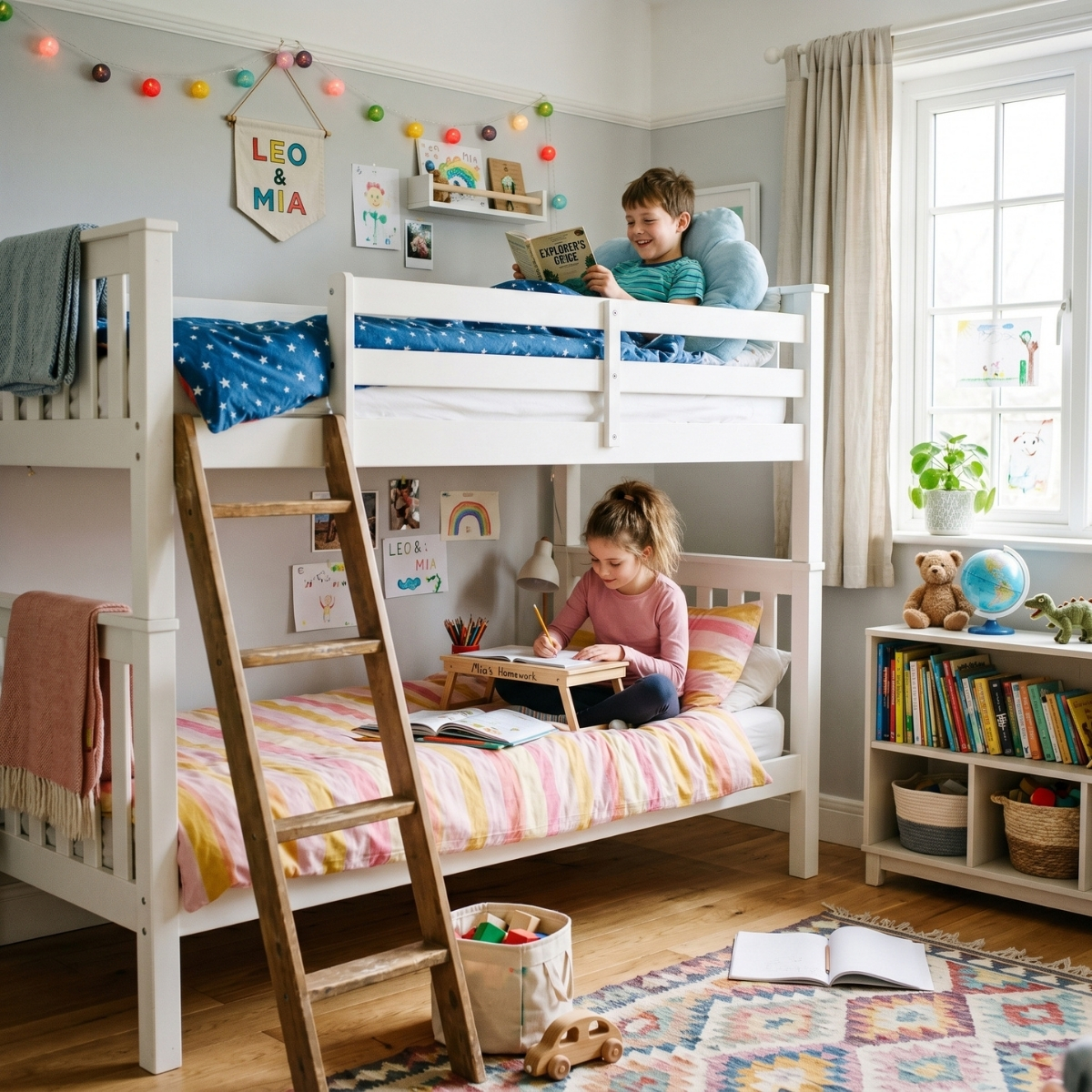
Furnishing a shared bedroom is one of those decisions that parents think about far longer than the purchase itself warrants — and yet the right choice genuinely changes how the room works every single day. A well-chosen bunk bed turns a tight shared space into something organized, comfortable, and livable for two children who each need a place that feels like their own.
This guide covers the key questions families ask when shopping for a bunk bed: which configuration suits the room, what makes certain designs worth the investment, how to maximize a small footprint, and what is actually involved in assembling a loft-style frame. Every product featured is available at OJCommerce with free shipping on every order.
Why a Bunk Bed Is One of the Smartest Bedroom Investments
- Vertical space utilization. Stacking two sleeping surfaces frees the floor area that two separate beds would occupy — often recovering 30 to 50 square feet in a typical kids' bedroom.
- Room for everything else. With sleeping covered vertically, the floor opens up for a desk, a play area, or a dresser that would otherwise simply not fit.
- Guest-ready flexibility. Twin-over-full configurations give the household a permanent guest sleeping option without dedicating a separate room.
- Storage built in. Many modern frames incorporate drawers, shelving, or staircase compartments that eliminate the need for additional furniture entirely.
- Long-term value. Solid wood and metal frames built to current safety standards last through childhood and into the teen years, delivering exceptional cost-per-use.
- Free shipping on every order. At OJCommerce, the listed price is the full price — nothing added at checkout.
🛏️ Bunk Bed Styles
The Different Styles of Bunk Beds, Explained
Knowing which configuration suits your room before you start browsing saves significant time. Each of the main styles below serves a distinct purpose — the right one depends on how many children need to sleep in the space, the age gap between them, and how much floor area you have to work with.
Twin-Over-Twin
The classic configuration: two identical twin sleeping surfaces stacked vertically. This style offers the most compact footprint of any two-sleeper option and the widest range of finishes, materials, and price points. It is the natural choice for two children of similar age sharing a room where floor space is the priority.

🛒 In Stock · Free Shipping
Twin Over TwinOrbelle Twin Over Twin Wooden Bunk Bed — White
Solid white wood construction with an integrated ladder and full-length guardrails — a clean, well-built frame that fits any shared kids' room and any bedroom colour palette.
Shop Now →Twin-Over-Full
A twin bunk on top with a full-size lower bunk — the right call when the two children have a meaningful age or size difference, or when the lower bunk doubles as a guest bed for occasional overnight visitors. Slightly wider than the twin-over-twin configuration, so room dimensions should be confirmed before ordering.

🛒 In Stock · Free Shipping
Twin Over FullCamaflexi Santa Fe Mission Solid Wood Twin Over Full Bunk Bed
Solid wood in a timeless mission style with an angled ladder — a full lower bunk for the older or larger sleeper, twin upper bunk for the younger child. A frame built to last well into the teen years.
Shop Now →Loft Bed
An elevated single sleeping platform with fully open space underneath — no lower bunk. The cleared area beneath the platform typically accommodates a desk, a dresser, or a reading chair, effectively creating two functional zones within the footprint of one piece of furniture. The ideal solution for a single-occupant room where study space matters as much as sleep space.
L-Shaped
Two sleeping surfaces arranged perpendicularly at a right angle, typically with one elevated and one at a lower level. The L-shaped frame creates a natural alcove beneath the upper bunk that suits a desk or a seating area well. It fits corner placements particularly effectively and avoids the sightline issues a straight stacked frame can create near windows or closet doors.
Triple Bunk
Three sleeping surfaces stacked vertically — the appropriate choice for three children sharing one room, vacation rental properties, or cabin applications. Triple bunks require meaningful ceiling clearance (9 feet or more as a general rule) and should always be measured carefully against ceiling height before purchase.

🛒 In Stock · Free Shipping
Triple Bunk · Full SizeACME Cairo Triple Bunk Bed — Sandy Black
Full-size triple bunk in a bold sandy black finish — three complete sleeping surfaces in one compact footprint. The most practical solution for three-child households and vacation rental setups.
Shop Now →Configuration Comparison at a Glance
| Style | Sleepers | Best For | Key Advantage |
|---|---|---|---|
| Twin-Over-Twin | 2 | Shared kids' rooms | Smallest footprint |
| Twin-Over-Full | 2 + guests | Age-gap siblings, guest rooms | Larger lower bunk |
| Loft Bed | 1 | Single child, study/play focus | Full floor space below |
| L-Shaped | 2 | Corner rooms, desk space needed | Natural under-bunk alcove |
| Triple Bunk | 3 | 3-child rooms, vacation rentals | Maximum sleeping capacity |
| Storage Bunk | 2 | Small rooms, high storage needs | Built-in drawers & shelves |
🛏️ Shop All Bunk Beds
Browse the Full Collection — Every style, finish, and price point with free shipping on every order.
💰 Bunk Beds Under $200
Shop Budget Picks — Solid twin-over-twin frames that deliver real quality without compromise.
✨ Unique Designs
Unique Bunk Bed Designs Worth Considering
Beyond the standard stacked frame, a generation of more thoughtful bunk bed design has emerged — pieces that combine sleeping, storage, study, and play into a single object. If the room needs to do more than simply hold a bed, the following categories are worth exploring.
House-Frame Bunk Beds
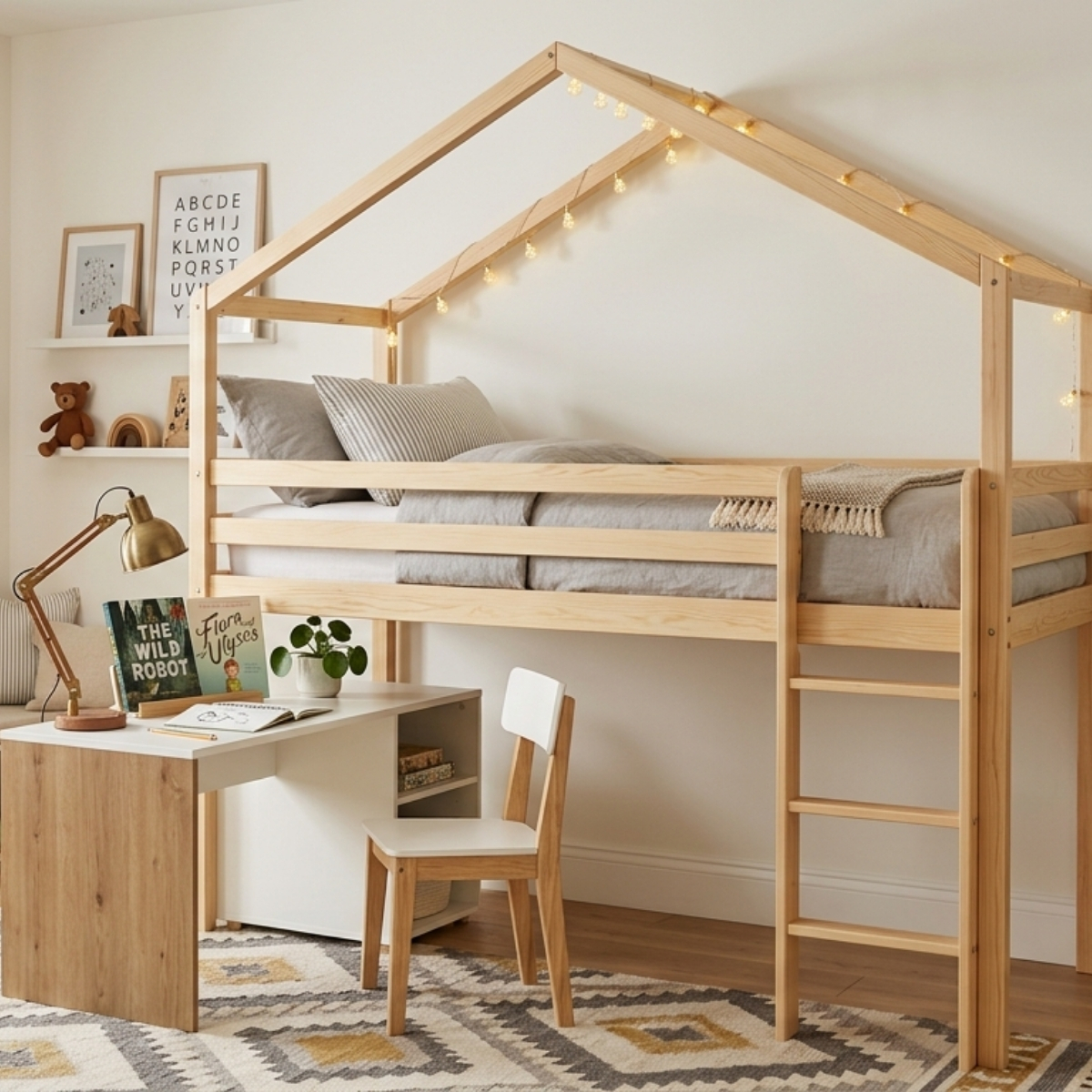
A bunk bed with a peaked roof-shaped headboard or full canopy frame that gives each sleeping surface the appearance of a miniature house. These are among the most visually striking options available today and fit particularly well in rooms with a Scandinavian or playful aesthetic. The canopy structure provides a sense of enclosure that many children respond well to at night, and the frame panels often incorporate small built-in shelving ledges at accessible heights.
Bunk Beds with Built-In Desks
A loft-style or L-shaped frame with an integrated desk surface positioned beneath the elevated sleeping area. No additional desk furniture is required, and no additional floor space is consumed — the desk is part of the bed's existing footprint. Particularly well-suited to school-age children who need a dedicated study area but share a compact room.
Bunk Beds with Trundles
A standard frame with a trundle on rollers stored flat beneath the lower bunk. When extended, it provides a third sleeping surface at floor level. When not in use, it disappears entirely — the most space-efficient solution for households that occasionally need to accommodate a guest or sleepover without dedicating permanent space to it.
Convertible Bunk Beds
Frames designed to separate into two freestanding twin beds when the stacked configuration is no longer needed. The same purchase that serves two children sharing a room today can be reconfigured into two independent beds if circumstances change — making convertible designs a particularly sound investment for families who anticipate a layout change in the medium term.
Metal Bunk Beds for Teens and Adults
Heavy-duty metal frames have grown significantly in relevance for teen bedrooms, guest rooms, and adult shared living situations. Clean geometric lines, powder-coated finishes in a range of colours, and full-size sleeping platforms extend the bunk bed well beyond its traditional children's bedroom context.

🛒 In Stock · Free Shipping
Metal Frame · Full SizeNaomi Home Hollywood Metal Bunk Bed Frame
Full-size metal bunk bed built for adults and older kids — clean industrial lines, heavy-duty construction, and a versatile design that works as well in a teen room or guest space as it does in a shared kids' bedroom.
Shop Now →📦 Storage Solutions
Bunk Beds with Storage for Small Rooms
When a bedroom is compact, every piece of furniture has to justify its floor space. A frame that incorporates meaningful storage effectively replaces a separate dresser or bookcase — recovering floor area while keeping the room organized. The following approaches are the most practical currently available.
Under-Bunk Drawer Storage
Built-in drawers integrated horizontally beneath the lower bunk platform — typically two to four deep drawers sized for clothing, bedding, or seasonal items. These add no visible footprint to the bed's external dimensions and keep the room's overall profile clean and uncluttered.
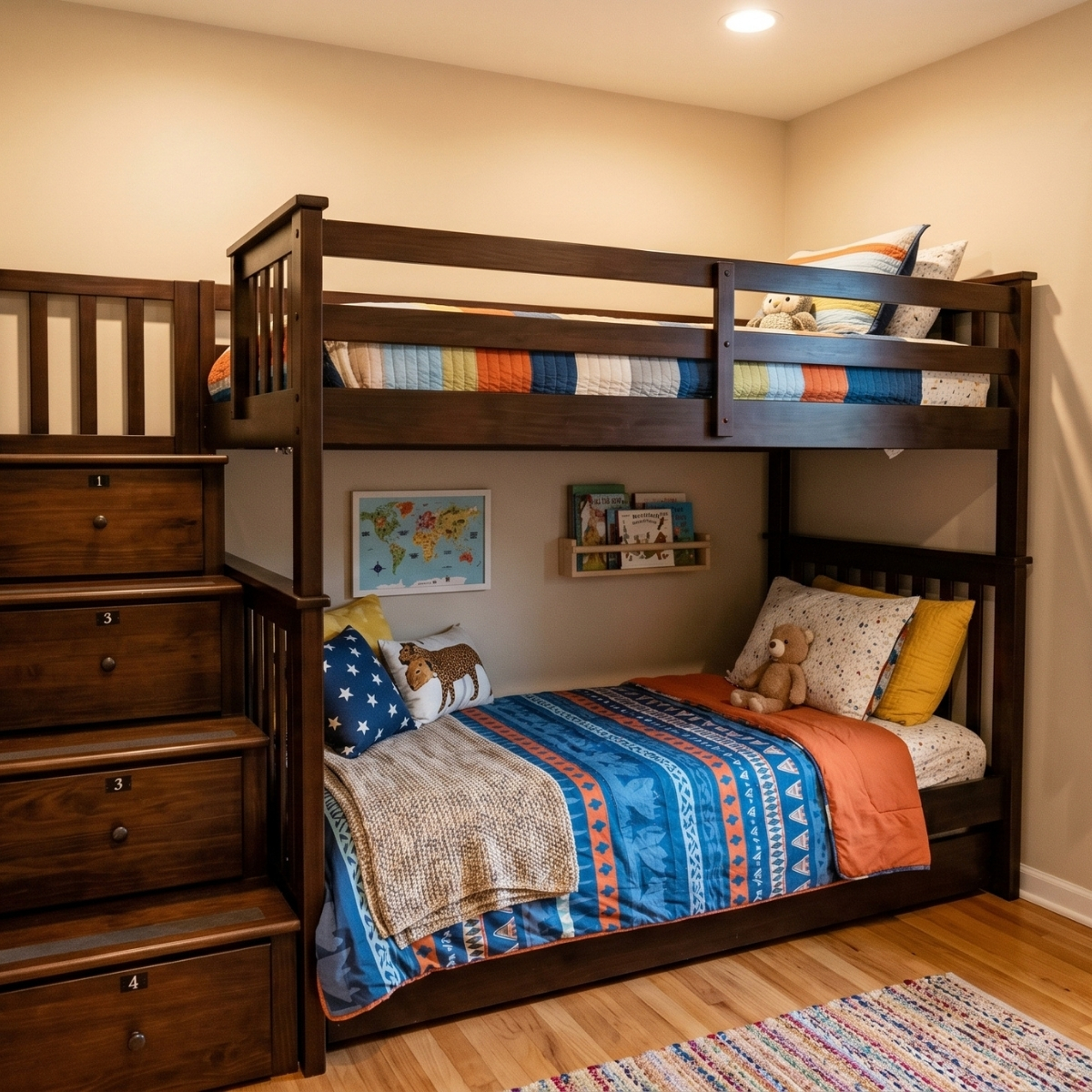
Staircase Storage Drawers
Staircase bunk beds convert the access structure itself into functional storage. Each step contains a pull-out drawer for clothing, books, toys, or art supplies. A six-step staircase adds the equivalent of a six-drawer dresser to the room while occupying only the floor space the staircase already requires — one of the most space-efficient storage configurations in any category of bedroom furniture. This is a key reason why bunk beds with storage for small rooms consistently rank among the most searched and most purchased configurations on OJCommerce.
Integrated Bookcase and Shelf Panels
Frames with bookcase headboards, footboard shelving, or side panel shelves provide open storage for books, alarm clocks, water bottles, and the small objects children accumulate around their sleeping area. Shelf storage is immediately accessible without opening or pulling anything out — well-suited to items that are reached for daily. Many shelf-integrated frames also include provisions for a small reading light or a USB charging port built into the panel.
Open Cubby Compartments
Some frames incorporate open cubbies in the side panels flanking the lower bunk or within the staircase structure. These bin-style compartments work particularly well in shared rooms because each child can maintain individually accessible storage zones within a single shared piece of furniture — a small but genuinely useful organizational distinction.
🗄️ Storage Bunk Beds
Shop Storage Frames — Staircase drawers, under-bunk storage, and bookcase designs that replace the need for a separate dresser.
💡 Bunk Beds Under $100
Shop Under $100 — Sturdy, safety-rated twin bunk bed frames at the lowest available price points with free shipping on every order.
📐 Room Planning
Getting the Most Out of a Small Bedroom
Choosing a bunk bed is only the first decision. Where the frame goes, how it interacts with the room's other furniture, and whether the storage it provides is matched to what the children actually need — these are the factors that determine whether the room genuinely improves. The following principles apply across all configurations.
Prioritize the Smallest Horizontal Footprint
The vertical stacking that makes a bunk bed efficient is only as useful as the floor area it saves horizontally. Standard twin-over-twin frames measure approximately 42 inches wide by 79 inches long — confirm these dimensions against the available wall space before ordering. Even a few inches of difference between models can meaningfully affect how much room is left for everything else.
Place the Frame Against a Wall or Into a Corner
A bunk bed positioned flush against one or two walls recovers walkway clearance on all unobstructed sides and opens the center of the room for study, play, or additional furniture. The L-shaped configuration is designed specifically for corner placement and creates an organized alcove beneath the upper bunk. A frame placed in the center of a room, by contrast, consumes clearance on all four sides — a significant loss in a small bedroom.
Use a Loft Bed for a Single-Occupant Room
For one child, a loft bed with open space below is typically the most efficient solution available. The cleared area beneath — usually 50 to 60 inches of headroom — accommodates a full desk, a dresser, or both. Space-saving bunk beds for small rooms are most effective when the configuration is matched to the actual occupancy: a loft bed for one child recovers more usable floor space than a two-sleeper bunk with an empty lower bunk.
Let the Storage Configuration Replace Other Furniture
A dresser occupies 4 to 6 square feet of floor space. A bookcase occupies another 2 to 4. A frame with staircase drawers and integrated shelving can eliminate both, recovering 6 to 10 square feet in a room that may only total 100 square feet overall. The visual and practical effect is significant — and it is the primary reason that storage-integrated frames tend to remain in families' bedrooms far longer than standard frames do.
Verify Ceiling Clearance Before Purchasing
Standard ceiling height is 8 feet. A typical twin-over-twin bunk bed with mattresses installed measures 66 to 72 inches in total height, leaving 24 to 30 inches of clearance above the top mattress. This is the recommended minimum for comfortable seated use on the top bunk. In rooms with ceilings below 8 feet, confirm the specific model's assembled height plus mattress thickness does not reduce this clearance below 24 inches before placing an order.
Room Measurement Checklist Before You Shop
- Measure the room: width, length, and ceiling height.
- Confirm the bunk bed frame's horizontal footprint fits the available wall space.
- Calculate ceiling clearance: ceiling height minus total bed height (frame + mattress).
- Identify which additional furniture a storage-integrated frame could replace.
- Plan the ladder side clearance — a minimum of 36 inches is recommended.
- Check mattress thickness compatibility — 6 to 8 inches is ideal for the top bunk.
🛒 In Stock · Free Shipping
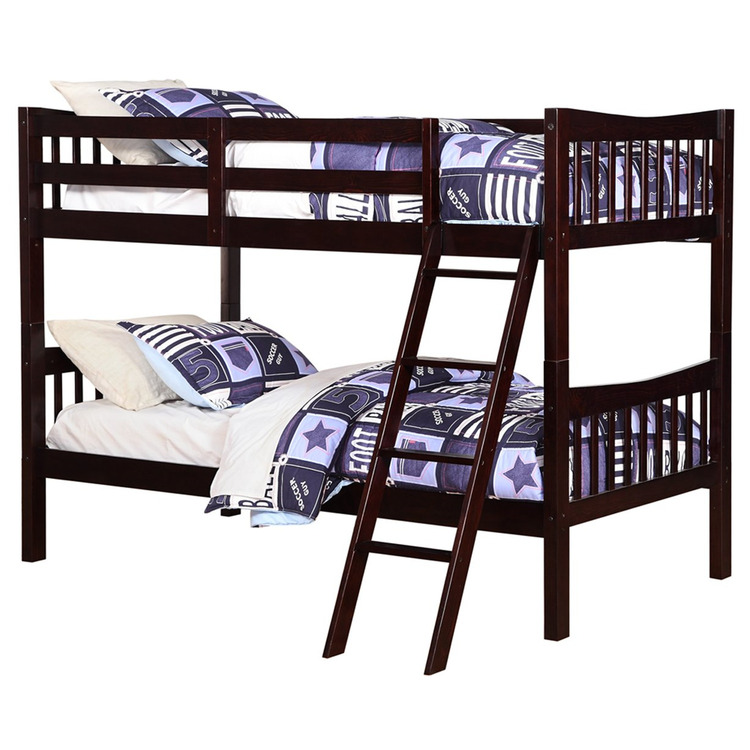
Twin Over Twin · WoodAngel Line Fremont Twin Over Twin Bunk Bed — Espresso
Solid wood construction in a rich espresso finish with full-length safety guardrails and integrated ladder — a compact, well-proportioned frame designed specifically for smaller shared bedrooms.
Shop Now →🔧 Assembly Guide
How to Build a Loft Bunk Bed: A Step-by-Step Overview
A loft bunk bed — an elevated single sleeping platform with cleared space below — is one of the most functional things a parent can add to a single child's bedroom. The following walkthrough applies to both ready-to-assemble (RTA) frames from OJCommerce and to ground-up custom builds. The structural logic is identical in both cases.
Determine the position in the room. Measure ceiling height, available wall width, and the intended clearance beneath the sleeping platform — a minimum of 48 inches for a desk or dresser, 60 inches if the child will sit upright in a chair beneath the frame. Confirm the planned platform height leaves at least 24 to 30 inches between the top mattress surface and the ceiling.
Solid wood (pine, rubberwood, or hardwood) holds screws reliably, finishes well, and is straightforward to repair. Metal frames are lighter, typically less expensive, and do not warp. Most RTA loft frames at OJCommerce use solid wood or a wood-and-metal combination. Both are structurally sound approaches — the choice depends on aesthetic preference and budget.
The vertical posts are the structural foundation. For RTA models, attach the provided leg hardware per the instruction manual. For custom builds, cut four posts to the desired platform height plus mattress thickness plus a minimum of 5 inches for the guardrail. Verify that all four posts are identical in length before proceeding to the rails.
Attach the long side rails and short end rails to the four corner posts at the planned platform height using the provided bolts or lag screws. Use a level on each rail segment before fully tightening the hardware — an unlevel platform causes mattress migration and uneven guardrail height.
Evenly spaced wooden slats (minimum 2.75-inch width, maximum 3-inch gaps) or a solid 3/4-inch plywood deck form the mattress support surface. A plywood deck provides a firmer, more uniform surface and is preferable for foam mattresses. Secure all slats or the panel to the side rails before installing guardrails.
Guardrails are non-negotiable. Install full-length guardrails on every side of the sleeping platform that does not contact a wall — minimum guardrail height is 5 inches above the top mattress surface. For RTA models, follow the manual precisely. For custom builds, use 1x6 lumber secured with carriage bolts through the corner posts.
Fixed ladders angled at approximately 75 degrees provide the most compact access footprint and are standard on most RTA loft frames. Staircase access requires more floor clearance at the bed's end but is easier and safer for younger children and for nighttime use. Secure all ladder or staircase hardware fully before allowing anyone to use the frame.
Locate the wall stud nearest the head end of the bed using a stud finder and drive a lag screw through the top end rail or a dedicated anchor bracket into the stud. Wall-anchoring eliminates the lateral sway that develops in freestanding loft frames under active use. This step is strongly recommended for all configurations and essential for any frame in a room occupied by children under age 10.
Place the mattress on the support surface and measure from the top of the mattress to the top of each guardrail on all sides. The measurement must reach at least 5 inches on every side. If it does not, either use a thinner mattress or increase the guardrail installation height before allowing any occupant on the top bunk.
Decide what goes under the loft before purchasing the bed. Confirm that desk or dresser heights are compatible with the platform clearance, and that the path to any furniture placed beneath does not conflict with the ladder position. The under-loft area is most commonly used for a desk and chair, a dresser, a wardrobe, or a combination — each of which would otherwise require additional floor space the room may not have.
What to Check Before You Order
Wood vs. Metal Frames
Solid wood bunk beds — in pine, rubberwood, or hardwood — carry a warm, natural aesthetic that fits farmhouse, Scandinavian, transitional, and traditional bedroom styles. They accept custom paint or stain well and are generally easier to repair if surface damage occurs over years of use. Metal frames offer a cleaner, more geometric silhouette at a typically lower price point. Both materials support safe, long-term daily use when the frame is assembled correctly and the weight limits are observed.
Safety: What to Verify on Every Model
- Full-length top-bunk guardrails on all open sides — partial guardrails with a gap at the ladder opening do not meet recommended safety standards.
- Guardrail height of at least 5 inches above the mattress surface after the mattress is installed.
- Weight capacity rated for the intended users — verify both upper and lower bunk limits separately.
- Ladder hardware bolted to the frame, not resting against it.
- Slat spacing no wider than 3 inches between slats to prevent mattress sag and maintain even support.
Mattress Compatibility
Most bunk beds ship as frames only. Standard twin dimensions (38 by 75 inches) fit twin bunk frames; full dimensions (54 by 75 inches) fit full lower bunks. A mattress of 6 to 8 inches thickness is recommended for the top bunk — thicker mattresses reduce the effective guardrail clearance and may fall outside the manufacturer's specified safe-use parameters.
Room Clearance
In addition to ceiling clearance, plan for a minimum of 36 inches of walkway clearance on the ladder side of the bed. Confirm that the bedroom door opens fully without contacting the frame or any furniture positioned near the foot of the bed. Sketch the layout before ordering if any of these clearances are close to the minimums.
🛏️ Browse by Style
Shop All Configurations — Twin-over-twin, twin-over-full, loft, storage, and triple bunk styles in one place with free shipping.
🗄️ Frames with Storage
Shop Storage Designs — Under-bunk drawers and staircase compartments that eliminate the need for a separate dresser.
OJCommerce carries bunk beds across every style, configuration, finish, and price point — twin-over-twin, twin-over-full, loft beds, storage frames, staircase designs, convertible models, metal frames, and more. Every order ships free. Whether you are furnishing a shared kids' room, maximizing a small bedroom, or equipping a vacation rental property, the right frame is in the collection.
Conclusion
The right bunk bed does a great deal of work quietly. It gives two children equal, defined sleeping spaces in a room that might otherwise struggle to hold both of them comfortably. It provides storage where none existed. It creates study space beneath a loft that would otherwise be empty floor. And when the time comes to reconfigure, a well-built frame converts or separates without waste. Whether the question is which of the different styles of bunk beds fits the available space, which unique bunk bed designs genuinely justify their price, or exactly how to build a loft bunk bed from the frame up — the answers lead to the same place. Browse the full collection at OJCommerce and find the frame that fits the room, the family, and the years ahead.
Frequently Asked Questions
1. How do you build a loft bunk bed?
The process involves selecting a frame material, assembling the four corner posts and horizontal rails at the planned platform height, laying the slat or plywood mattress support, installing full-length guardrails on all open sides, attaching the ladder or staircase, and wall-anchoring the frame to a stud. Most RTA loft bunk beds from OJCommerce include all hardware and step-by-step instructions. The full ten-step process is detailed in the assembly section above.
2. What are the different styles of bunk beds?
The main configurations are twin-over-twin, twin-over-full, loft beds, L-shaped frames, triple bunk beds, and storage-integrated bunk beds with drawers, shelves, or staircase compartments. Each style is explained in detail in the guide above, along with a configuration comparison table.
3. What should I look for in bunk beds with storage for small rooms?
The most practical options are frames with under-bunk drawers, staircase steps that double as pull-out storage, or integrated bookcase panels. The goal is a frame that replaces at least one additional furniture piece — a dresser or bookcase — and recovers meaningful floor space as a result. Staircase storage bunk beds are particularly effective because each step functions as a full-depth drawer without adding any extra footprint.
4. Are bunk beds safe for young children?
Bunk beds are generally recommended for children ages 6 and older. Essential safety features include full-length guardrails on the top bunk, a ladder or staircase with hardware bolted to the frame, a snug-fitting mattress within the manufacturer's recommended thickness range, and a weight capacity verified for the intended user. Wall-anchoring the frame adds a further layer of stability for younger or more active children.
5. How much ceiling clearance is needed for a bunk bed?
A minimum of 24 to 30 inches between the top mattress surface and the ceiling is recommended. Measure ceiling height, subtract the total bed height (frame plus mattress), and confirm the result before ordering. Rooms with ceilings below 8 feet require careful model selection — check the assembled dimensions listed on each OJCommerce product page.
6. Do bunk beds come with mattresses at OJCommerce?
Most bunk bed frames at OJCommerce are sold without mattresses. Twin-over-twin frames require two twin mattresses; twin-over-full frames require one twin and one full. A mattress of 6 to 8 inches thickness is recommended for the top bunk to preserve adequate guardrail clearance above the sleeping surface.