Pet-Friendly Living Room Ideas
Create a living room that is both stylish and accommodating to your furry companions with thoughtful planning and design.


A cat tree is a multi-level structure designed for cats to climb, scratch, play, and relax. It benefits your cat by offering a safe space for climbing and perching, satisfying their natural instincts. Cat trees help reduce boredom, provide exercise, and keep your cat’s claws healthy by incorporating scratching posts.
To choose the right size, consider your cat’s size and activity level. For small spaces, opt for compact cat trees around 24-36 inches tall. For larger homes or multiple cats, choose a multi-level tree between 48-72 inches, ensuring ample space for climbing and playing. Make sure the platforms are wide enough for your cat to sit or sleep comfortably.
Cat trees are typically made from sturdy wood, covered with carpet, faux fur, or plush fabric for comfort. Scratching posts are wrapped in durable sisal rope. Look for high-quality materials to ensure durability, especially for large or active cats.
Yes, cat trees are safe for large cats as long as they are built to support their weight. Choose a sturdy cat tree with platforms measuring at least 18-20 inches wide and reinforced posts to ensure stability for larger breeds like Maine Coons.
Most cat trees come with assembly instructions and necessary tools. Start by organizing all parts, follow the guide step by step, and ensure all screws are tightened. For tall cat towers over 60 inches, consider anchoring them to the wall for extra stability.

Cat trees range from compact models to elaborate multi-level towers. Types include:
Regularly vacuum the cat tree to remove fur and debris. Spot clean stains with a pet-safe cleaner. Check for loose screws or worn-out parts, especially on scratching posts, and replace them as needed to ensure longevity.
The ideal height depends on your cat’s activity level. For active cats, a 60-72 inch cat tower provides ample climbing space. Senior or less active cats may prefer shorter towers between 24-48 inches for easier access.
Yes, cat trees are great for multi-cat households. Choose a tree with multiple platforms, condos, and perches, ensuring it’s sturdy enough to hold the combined weight. Multi-level towers around 60-72 inches tall are ideal for multiple cats.
A cat tree usually refers to smaller, simpler structures around 24-48 inches tall, while a cat tower refers to larger, multi-level structures that can reach heights of 60-72 inches and often include more interactive elements like condos, hammocks, and ramps.
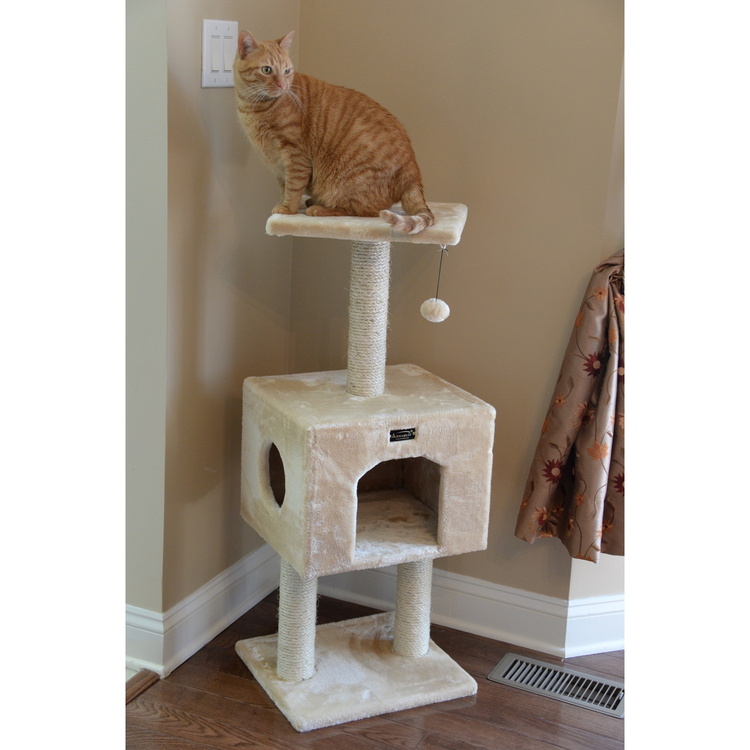
Yes, cat trees are designed with scratching posts made from sisal rope or carpet, which help satisfy your cat’s natural urge to scratch. This can prevent damage to your furniture.
Yes, compact cat towers, especially those under 48 inches tall, are perfect for small apartments. Opt for vertical designs with a small base, or wall-mounted options to save floor space.
For active cats, a multi-level cat tree should be at least 60 inches tall, offering multiple perches and platforms. Shorter trees between 36-48 inches work well for smaller spaces or senior cats.
Yes, providing a cat tree with dedicated scratching posts can divert your cat’s attention from your furniture. Choose a tree with multiple scratching posts to encourage healthy scratching habits.
Standard cat trees can support between 15-25 lbs per platform. For larger cats or multiple cats, look for trees that can handle up to 30-40 lbs per level.
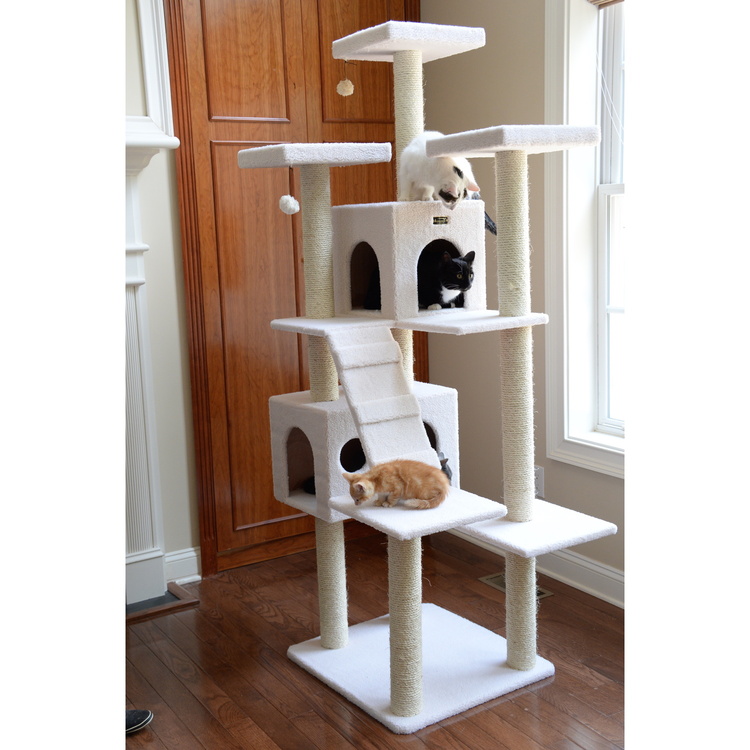
Multi-level cat trees offer your cat more space to climb, play, and rest. The different heights provide opportunities for exercise, while the various perches give your cat safe spots to observe their surroundings.
Yes, cat trees for senior cats feature lower platforms, ramps, and softer materials for easier access and comfort. Look for heights under 36 inches with gradual steps or ramps to accommodate reduced mobility.
A well-maintained cat tree can last several years, depending on the quality of materials and usage. Replace worn-out scratching posts or torn fabric to extend its lifespan.
Yes, many cat trees allow for customization. You can add or remove platforms, replace scratching posts, and even add hammocks or tunnels to create a tree tailored to your cat’s preferences.
The most durable cat towers are made from solid wood, with sisal-wrapped posts and plush or carpeted platforms. These materials ensure stability and long-lasting durability, even for active or heavy cats.

Yes, securing tall cat towers over 60 inches to the wall is recommended, especially if you have large or energetic cats. Wall anchors add stability and prevent tipping.
For large breeds like Maine Coons, choose a cat tree with wider platforms (at least 20 inches) and reinforced posts to support their weight. Look for designs that offer sturdy, spacious perches and strong materials like solid wood.
Encourage your cat to use the tree by placing treats, toys, or catnip on the platforms. Gradually lead your cat to the higher levels by rewarding them when they explore.
Yes, eco-friendly cat trees are made from sustainable materials like bamboo or recycled wood. These options are durable, stylish, and reduce environmental impact.
Cat towers with multiple levels, ramps, and interactive toys stimulate your cat’s instincts to climb, jump, and play. These features promote physical activity, which is essential for your cat’s health and wellbeing.

For kittens, look for a tree under 48 inches tall with soft, safe materials. Choose a tree with built-in cat toys and low platforms to encourage play without overwhelming them.
Yes, cat trees provide a safe space for your cat to retreat to when feeling anxious or stressed. Elevated perches give your cat a sense of security and a place to observe their surroundings.
Yes, wall-mounted or vertical cat trees are great for small rooms. These designs take up minimal floor space while providing height for climbing and perching.
Ensure the cat tree is stable by securing it to the wall. Check regularly for loose screws and worn-out parts. Always choose a cat tree that can support your cat’s weight, especially for large cats.
Most cats enjoy cat trees, especially those that love to climb or scratch. If your cat is hesitant, entice them with treats, toys, or catnip to explore the tree.

Choose a cat tree with multiple easily accessible platforms, ramps, and gradual steps to suit kittens, active adults, and seniors. Look for soft, stable surfaces, sturdy construction, and some lower platforms or ramps for older cats to climb safely, ensuring all ages can enjoy and access the tree comfortably.
A cat condo typically refers to an enclosed space or "hideaway" for cats to sleep or relax, often located on the bottom or middle level of a cat tree. A cat tree is a larger structure that includes multiple platforms, scratching posts, and sometimes condos for climbing and playing.
Yes, many cat trees allow for add-ons like extra perches, hammocks, or toys. Check if the design supports expansion, and ensure that any added elements are securely fastened to maintain stability.
Most cat towers are designed for indoor use, as materials like carpet or faux fur can deteriorate in the elements. However, you can find outdoor-specific cat towers made from weather-resistant materials like treated wood or plastic.
Choose a cat tree with solid construction, such as one made from wood, reinforced platforms, and thick, sisal-wrapped scratching posts. A tree at least 48-72 inches tall with a wide base will provide additional stability.
Cat trees offer multiple perches and safe spots, allowing each cat to claim their territory and avoid conflict. The vertical space helps reduce aggressive encounters and territorial stress in multi-cat households.
Active cats benefit from a cat tree with at least 4-5 levels, reaching 60 inches or more in height. This allows your cat to climb, jump, and explore various heights, providing plenty of exercise and stimulation.

Yes, hammocks and beds on cat trees provide cozy spots for your cat to rest after playtime. These elements offer comfort and relaxation, allowing your cat to unwind in a secure environment.
Some popular brands known for high-quality cat trees include Frisco, Go Pet Club, and Vesper. These brands offer durable materials, innovative designs, and cat-friendly features, making them reliable choices for your pet.
To prevent tipping, choose a tree with a wide, stable base and make sure it is properly assembled. For tall cat trees, secure them to the wall with safety brackets or anchors, especially if you have large or active cats.
Yes, cat trees are excellent for enhancing your cat's natural climbing abilities. Multi-level structures with varied heights encourage your cat to jump and climb, improving their agility and coordination.
Cat trees come in various colors and styles to blend with your home decor. Neutral colors like beige, gray, and brown are popular choices, while minimalist or modern designs with sleek lines and natural wood finishes can complement contemporary interiors.

Yes, placing your cat tree near a window allows your cat to enjoy watching the outdoors, which can be stimulating and entertaining. Cats love to observe birds, people, or nature from a safe perch.
Yes, if you're handy with tools, you can build your own cat tree using materials like wood, sisal rope, and carpet. DIY cat trees allow for full customization based on your cat's preferences and your home’s dimensions.
Place your cat tree in a quiet but central area of your home where your cat can feel safe and observe the environment. Popular spots include near windows, in the living room, or in a corner where the cat can retreat when needed.
Yes, indoor-only cats especially benefit from cat trees as they provide an outlet for climbing, scratching, and playing. This helps simulate natural outdoor behaviors and keeps your cat entertained indoors.
Introduce your cat to the cat tree slowly by placing it in a familiar area. Use toys, treats, or catnip to encourage your cat to explore the new tree. Give your cat time to adjust and reward them for interacting with it.

Vertical cat trees with small bases and wall-mounted designs work well in tiny spaces. Collapsible or corner models also maximize play and rest areas without using much floor space.
To fix a wobbly cat tower, check all screws and fastenings to ensure they are tightened. If the base is unstable, consider securing the cat tree to the wall or adding additional weight to the base for support.
Yes, budget-friendly cat trees are available, often made from lighter materials like particleboard. You can find small, basic models around 24-36 inches for under $50, but ensure they are sturdy enough for your cat’s safety.
Scratching posts on cat trees provide a dedicated place for your cat to scratch, helping them maintain healthy claws while protecting your furniture. Sisal-wrapped posts are durable and ideal for encouraging natural scratching behavior.
Encourage your cat to use the tree by placing treats, toys, or a bit of catnip on the different levels. You can also play with your cat near the tree, gradually enticing them to climb and explore.
Enhance your cat tree with accessories like hanging toys, dangling feathers, or tunnels. Adding beds, hammocks, or soft cushions can make the tree more inviting for your cat to relax in after playtime.
When shopping for the best cat tree for extra large cats, the key is ensuring both stability and space. Extra large cats need a cat tree that can support their size and weight while still offering enough room to stretch, climb, and play. Ideally, you should look for a cat tree with thick, sturdy posts and a large base. The platforms should be spacious enough for your cat to comfortably lounge or sleep, and the sisal rope wrapped around the posts should be tough enough to withstand the pressure of heavy scratching. Additionally, a cat tree for fat cats needs to have solid construction and wide perches that won’t wobble under the weight. A good cat tree for extra large cats would include reinforced materials, soft yet durable cat tree fabric, and maybe even multiple levels for added space. For a premium option, consider the Truva Veloria 52" Cat Tree which offers deluxe design and sturdy construction for large cats.
Choosing the right cat tree depends on several factors, including the cat's size, activity level, and your living space. For instance, if you're looking for a cat tree for multiple cats, you’ll want to consider a multi-level design with plenty of platforms, sisal-wrapped posts for scratching, and cozy hideaways. For owners with small living spaces, a cat tree for small spaces would be ideal, as it offers vertical play areas without taking up too much floor space. Consider the height of the tree as well: larger cats may require taller trees, while best cat tree for older cats would likely be shorter and feature low-impact ramps or steps. You’ll also want to look for quality cat tree fabric that’s easy to clean and durable enough for everyday use.
A medium cat tree is typically ideal for cats weighing between 7-15 pounds. These cats don't need the extra-large platforms or sturdy bases required for bigger breeds, but they still need space for climbing, scratching, and lounging. If you have a smaller cat, this would be an appropriate size. However, if you have a cat tree for small spaces, you can still find a medium-sized tree that doesn’t dominate your room but offers enough space for your cat to feel comfortable and active. It's essential to make sure that the tree you select has wide enough surfaces and strong enough supports for your cat's size and behavior.
Securing a cat tree to the wall is important for safety, especially when you have an active or extra large cat that might cause the tree to topple. To secure the tree, you can use L-brackets or other sturdy wall anchors that are easy to install. Drill into the wall studs (not just drywall) for maximum strength, and attach the brackets to the back of the cat tree. For extra peace of mind, you can also use cat tree fabric to conceal the wall anchors or bolts, keeping the tree looking sleek and modern. This is especially crucial for a cat tree for disabled cats or one designed for older cats that might require more stability to ensure they don’t injure themselves while climbing or jumping.
The type of rope used for scratching posts on a cat tree is important for durability and safety. Sisal rope is the most popular and durable material for scratching posts, as it's tough enough to withstand the repeated scratching of active cats. It's also natural and safe for your cat to chew on. If you're looking for a cat tree for fat cats or a best cat tree for multiple cats, you’ll want to make sure the sisal rope is tightly wound and securely attached to the posts. Avoid synthetic ropes or ones that can unravel easily, as they might not hold up to heavy usage. For a mid-century modern cat tree, you may also find minimalist designs that use sleek materials while still ensuring the durability of the rope.
The size of the cat tree you choose depends largely on your cat’s personality, size, and available space in your home. If you have multiple cats, a larger tree is essential to give each cat room to claim their space, scratch, and relax without feeling crowded. For a cat tree for small spaces, you’ll want to prioritize vertical designs that offer height without taking up too much floor area. For extra large cats, a larger, more robust tree with wide platforms and solid support is necessary. Ultimately, the right size will depend on how active and large your cat is, as well as the available space you have in your home.
When shopping for a modern cat tree, aesthetics are just as important as functionality. Many modern designs, such as a mid-century modern cat tree, are sleek, minimalist, and often incorporate natural wood, neutral colors, and geometric shapes. Aside from design, you should look for functionality such as sturdy posts, scratching surfaces made of natural materials like sisal, and cozy nooks for your cat to rest. A cat tree for two cats or a cat tree for fat cats should still prioritize stability, offering ample space, strong posts, and secure platforms. Some modern cat trees also feature easy-to-clean fabrics or covers, which can be a bonus for pet owners.
The size of the sisal rope you use for a cat tree is usually based on the diameter of the posts. Generally, sisal rope with a diameter of 3/8 to 1/2 inch is ideal for most cat trees. This thickness ensures that the rope is thick enough for cats to sink their claws into while remaining durable and secure. For a cat tree for disabled cats, it's essential that the sisal is tightly wound and smooth to reduce the risk of snagging, ensuring that the tree is comfortable for all cats. When considering the rope for a best cat tree for multiple cats, make sure the material is tightly wound and durable to withstand the stress of multiple cats using it simultaneously.
To make an extra large cat tree more stable, there are several strategies you can employ. First, ensure the base is heavy and wide enough to support your cat’s weight, especially for large or multiple cats. If you’re worried about tipping, secure the tree to a wall using brackets, which will provide additional stability. Adding anti-tip hardware, such as screws or brackets, can also prevent the tree from falling over during rough play. For extra large cats, you may also want to ensure the platforms are wide and sturdy enough to avoid wobbling when your cat jumps onto them. Lastly, keep the cat tree fabric well-maintained to prevent it from loosening over time and contributing to instability.
A small cat tree is ideal for kittens, cats on the smaller side, or homes with limited space. If your cat is not particularly active or tends to sleep most of the time, a small cat tree could be a good choice. If you live in a small apartment or don’t have the room for a large cat tree, a cat tree for small spaces can still offer plenty of vertical climbing and scratching opportunities. For cats that don’t engage in much climbing or play, a compact tree that’s easy to fit into a corner of your home will suffice. Similarly, a cat tree for disabled cats might benefit from being small, as it would allow for easy access and fewer jumps or climbs that might strain your cat.
When choosing a cat tree, look for sturdy construction, high-quality materials, and a stable base to ensure safety. Select a design with multiple levels, scratching posts, and cozy hideaways to match your cat’s climbing and resting needs. Consider the size to fit both your space and your cat’s activity level, and opt for easy-to-clean surfaces for hassle-free maintenance.

Create a living room that is both stylish and accommodating to your furry companions with thoughtful planning and design.

Explore the potential hazards associated with headboards and provide practical tips to ensure safety for your loved ones.