



Confused between budget and premium furniture? Learn how to choose the best value for your home. Compare quality, durability, style, and cost to make smart furniture decisions that fit your lifestyle and budget.
Furnishing your home today means navigating multiple shopping channels, each with distinct advantages that align with different needs and preferences. The question isn't whether physical furniture retailers or online platforms are universally superior—it's understanding which model works best for your specific situation.
Modern furniture shoppers benefit from knowing exactly what each channel delivers. This guide breaks down the real differences, helps you identify your priorities, and shows how combining both approaches often yields the best results.
Understanding Physical Furniture Retailers: What You Actually Get
Walking into a furniture showroom offers tangible benefits that digital experiences struggle to replicate. You're not just browsing a catalog—you're making direct contact with products that will occupy your space.
The Core Advantages of Shopping in Physical Locations
Immediate Assessment of Comfort and Durability
Sitting on a sofa, testing drawer mechanisms, and feeling upholstery fabric weight directly inform your decision. This sensory evaluation prevents returns driven by comfort disappointment. You discover whether a chair's seat depth matches your proportions, if wood finishes align with your aesthetic, and whether construction feels solid.
Curated Room Scenarios
Showrooms display complete room setups that demonstrate how individual pieces work as cohesive collections. Seeing a dining table with matching chairs in proper proportion, lighting, and wall color context provides spatial clarity that online photos cannot deliver. This visual coherence guides your purchasing decisions and reduces design missteps.
Immediate Problem Resolution
Sales staff can answer detailed questions about specific products, material composition, care requirements, and available customization options on the spot. Concerns about durability, warranty coverage, or assembly complexity get addressed through direct conversation rather than email exchanges.
Transparent Pricing Discussions
In-store personnel often have flexibility with pricing, especially for large purchases. Negotiating bulk discounts, financing options, or included delivery and assembly services happens face-to-face, where decisions can be made immediately.
Real Limitations of Physical Retail Environments
Inventory Constraints Affecting Selection
Physical locations maintain limited stock due to floor space restrictions. Desired colors, sizes, or designs frequently appear as special-order items with extended wait times. If you prefer furniture available to take home or receive quickly, inventory gaps create frustration.
Time Investment Requirements
Comprehensive furniture shopping at multiple locations demands several hours. Travel, parking, browsing, and waiting for assistance consume time that busy schedules may not accommodate. Weekend rush periods intensify this challenge.
Regional Availability Barriers
Geographic location restricts access to specific retailers and their product selections. Rural areas face particularly limited options, potentially requiring long-distance travel for adequate selection.
Online Furniture Marketplaces: Digital Transformation of Home Furnishing
E-commerce platforms have fundamentally changed furniture accessibility, offering unprecedented selection, price transparency, and shopping flexibility. However, the digital experience introduces its own set of considerations.
How Online Platforms Enhance Your Furniture Shopping
Access to Global Product Catalogs
Online marketplaces host thousands of furniture options from numerous vendors, exposing you to international styles, contemporary designers, and niche manufacturers impossible to access locally. Filtering by style, color, price point, or dimensions streamlines discovery across vast inventories.
Real-Time Price Comparison Across Vendors
Multiple sellers offering identical or similar items create competitive pricing environments. You can instantly compare costs, identify seasonal sales, and leverage discount codes. This transparency empowers you to allocate budgets strategically across multiple pieces.
Authentic Customer Feedback and Ratings
Verified purchase reviews provide unfiltered insights about real-world performance. Customers detail comfort experiences, durability concerns, assembly challenges, and delivery experiences. This aggregated feedback helps identify potential issues before purchasing, reducing disappointment rates.
Shopping on Your Schedule Without Pressure
24/7 availability eliminates time constraints and the social pressure of in-store sales interactions. You research, compare, and decide at your own pace, often over multiple sessions as you develop clear preferences.
Convenient Delivery to Your Home
Many online furniture purchases include shipping, assembly, and installation services. This eliminates the logistics hassle of transporting large pieces and reduces the physical labor involved in setup.
Challenges Specific to Online Furniture Purchasing
Sensory Experience Gaps in Digital Environments
High-resolution photography and 360-degree views approximate but don't replicate in-person assessment. Colors appear differently in various lighting. Fabric textures, wood finishes, and construction details remain interpretative rather than verifiable. Seating comfort can only be guessed at, not experienced.
Delivery Reliability and Assembly Complexity
Shipping damage, delayed delivery, and complex assembly can negatively impact the purchase experience. Some items arrive requiring extensive setup, with unclear or incomplete instructions. Damage resolution processes take time and effort.
Return Process Friction and Associated Costs
Returning oversized furniture involves logistics challenges and potential restocking fees. If a piece doesn't match your space or expectations, managing the return requires arranging pickup, awaiting refunds, and replacing it with an alternative—a process spanning weeks rather than days.
Inconsistent Quality Control Across Different Sellers
Online marketplaces host vendors with varying quality standards, manufacturing practices, and customer service responsiveness. A high rating suggests reliability, but guarantees don't exist. New sellers or lesser-known manufacturers occasionally deliver inconsistent products.
Pricing Intelligence: Making Your Budget Work Effectively
Cost considerations significantly influence purchasing decisions. Understanding pricing structures across channels helps you maximize your furniture investment.
| Pricing Factor | Physical Retailers | Online Marketplaces |
|---|---|---|
| Base Product Costs | Higher due to operational overhead (staff, real estate, utilities) | Lower due to reduced overhead, especially for direct-to-consumer sellers |
| Discounting Patterns | Seasonal sales events, negotiable for bulk purchases, clearance items | Frequent promotions, flash sales, subscription discounts, coupon codes |
| Hidden Costs | Usually included delivery and assembly within stated price or negotiated | Shipping fees, white-glove service premiums, assembly add-ons |
| Value Additions | Extended warranties, financing options, loyalty rewards, design consultation | Prime member benefits, bulk purchase discounts, free shipping thresholds |
Online platforms typically offer lower entry prices, particularly for budget-conscious shoppers. Physical retailers justify higher prices through service, customization options, and included delivery services. Savvy shoppers use both channels—researching online to establish fair pricing, then negotiating with local retailers.

Quality Evaluation: How to Assess Furniture Before Commitment
Physical Retail Advantage
Direct material inspection provides confidence. You evaluate wood grain quality, upholstery fabric weight, joinery construction, and finish consistency immediately. Staff expertise offers context about material sourcing, manufacturer reputation, and expected longevity.
Online Research Strategy
Comprehensive review analysis becomes your quality assessment tool. Look for consistent comments about durability, comfort, color accuracy, and longevity across multiple reviews. Manufacturing specifications, material lists, and construction details in product descriptions provide quality indicators. Request sample fabric swatches when available.
Hybrid Verification Approach
Research prospective purchases online to narrow choices, identify top-rated options, and establish pricing expectations. Then visit physical locations to inspect finalists in person before finalizing orders. This combination balances selection breadth with tactile verification.
Delivery, Assembly, and Setup: Logistics That Matter
Getting furniture from purchase point to your home successfully impacts overall satisfaction significantly.
Physical Retailers typically offer coordinated delivery and assembly services, often included or negotiable within purchase price. You work with familiar businesses accountable to local reputation. Delivery windows are often faster, sometimes same-day or next-day for in-stock items.
Online Marketplaces provide varied logistics options depending on the seller. Standard shipping may take weeks. Third-party logistics companies handle delivery, sometimes lacking white-glove service standards. Some sellers offer expedited shipping at premium costs. Assembly services vary from included to optional paid add-ons.
For large purchases, confirm delivery and assembly policies before committing. Hidden logistics costs or extended timelines can undermine online pricing advantages.
Customer Service and Support Comparison
Physical Retail Support
In-store relationships enable quick issue resolution. Damage or defect claims process through familiar staff who understand your purchase. Adjustments, repairs, or quick replacements happen locally without shipping logistics.
Online Marketplace Support
Support quality varies dramatically by seller. Major platforms offer buyer protection policies and dispute resolution mechanisms. Smaller sellers may have limited support infrastructure. Communication happens via email, chat, or phone, introducing delays compared to in-person interaction.
Sustainability and Ethical Sourcing Considerations
Environmentally conscious furniture buyers increasingly prioritize sustainable material sourcing, responsible manufacturing, and minimal packaging waste. Physical retailers make sustainability commitments more transparent through in-store certifications and material documentation. Online sellers vary widely—some publish comprehensive sustainability practices; others provide minimal information.
Request specific information about material sourcing, manufacturing locations, and packaging practices from online sellers if environmental impact influences your decision.
The Hybrid Shopping Approach: Getting the Best of Both Worlds
Rather than viewing physical and online shopping as competing options, combining them strategically delivers optimal results.
Digital Research, Physical Verification
Start online to explore styles, compare prices, and identify top-rated options within your budget. This research narrows your choices to 3-5 viable options. Then visit physical locations to assess finalists in person, test comfort, and verify colors and finishes under natural lighting.
Online Curation with Local Purchase
Use online platforms for inspiration and design ideas. Take screenshots or notes about specific pieces that appeal to you. Ask physical retailers if they carry similar items, or request special orders for pieces discovered online.
Price Verification Strategy
Establish fair market pricing through online comparison. Share this information when negotiating with physical retailers, particularly for bulk purchases or complete room setups. Many retailers will match or beat significantly lower online prices to earn your business.
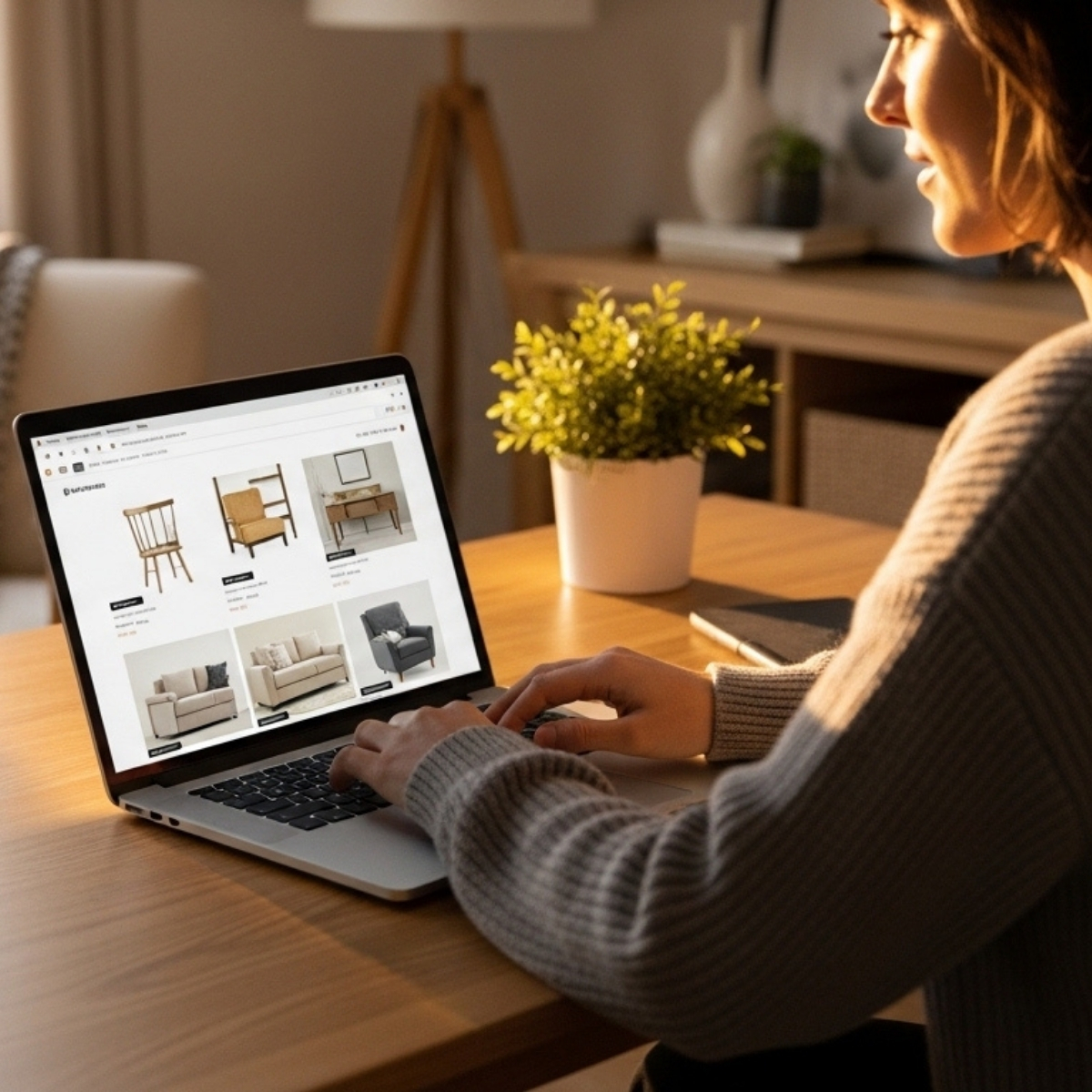
2026 Furniture Shopping Trends and Innovations
The furniture retail landscape continues evolving, blurring traditional channel distinctions.
Buy Online, Pickup In-Store Services
Retailers increasingly offer ordering online while picking up at nearby locations. This captures online convenience with retail accessibility, reducing shipping times and costs while supporting local businesses.
Virtual Room Planning and Visualization
Augmented reality and room visualization tools help online shoppers simulate how furniture appears in actual spaces. While not replacing in-person assessment, these technologies narrow the sensory gap.
Subscription and Membership Models
Online platforms offer loyalty programs providing member-exclusive pricing, free shipping, and priority customer service. These programs reward repeat customers with meaningful savings.
Sustainability-Focused Marketplaces
New platforms emphasizing eco-friendly furniture, second-hand options, and sustainable manufacturing practices address growing environmental consciousness among home furnishing shoppers.
Making Your Final Decision: A Strategic Framework
Choose Physical Retail When:
- You prioritize immediate comfort verification for seating purchases
- You need furniture urgently without waiting for delivery
- You prefer negotiating pricing and included services directly
- You value personalized design consultation and setup assistance
- You appreciate one-point accountability for the entire purchase process
Choose Online Marketplaces When:
- You want access to broader style options beyond local retail limitations
- You need flexibility to shop at your pace without time pressure
- You've researched thoroughly and are confident about your selection
- Budget optimization matters more than immediate availability
- You're comfortable with the slightly higher return process friction
Choose the Hybrid Approach When:
- You want to balance selection breadth with sensory verification
- You need confidence that purchases match your expectations
- You're furnishing an entire room requiring multiple coordinated pieces
- You want to leverage competitive pricing while supporting local retailers
FAQs About Furniture Shopping
Q: How can I determine if a piece of furniture shown online will work in my space?
A: Before purchasing, note exact dimensions and compare them against your space measurements. Request sample images showing the furniture with standard-sized objects (like a person or common household item) for scale reference. Many online retailers offer return policies allowing assessment in your actual space. If the online seller provides video demonstrations, these offer better spatial context than static photos.
Q: Are online furniture reviews reliable indicators of actual product quality?
A: Aggregated reviews provide valuable insights, but evaluate them critically. Look for consistent patterns across reviews rather than isolated comments. High review counts with consistent 4-5 star ratings suggest reliability. Cross-reference reviews mentioning specific issues (durability, assembly difficulty, color accuracy) with other sources. Sellers with established track records and platform verification systems offer more trustworthy feedback than new vendors with limited review history.
Q: What delivery options should I verify before purchasing furniture online?
A: Confirm shipping costs, estimated delivery timeframes, assembly inclusion or availability, and damage liability policies. Understand whether the seller or marketplace covers delivery damage. Verify if white-glove service (assembly and old furniture removal) is included or available. Check whether expedited shipping options exist if standard timelines don't meet your needs. Some sellers offer free delivery above purchase thresholds, potentially making bundled purchases more economical.
Q: How do return policies differ between physical retailers and online marketplaces?
A: Physical retailers often accept returns or exchanges easily within defined timeframes, sometimes without restocking fees for defective items. Online marketplace returns vary by seller but typically require return shipping costs (buyer's responsibility unless defective). Restocking fees of 10-20% are common. Some platforms handle returns through the marketplace, while others work directly with sellers. Read specific return policies before purchasing, as they significantly impact your recourse if a purchase doesn't meet expectations.
Q: What questions should I ask furniture retailers to assess quality and longevity?
A: Ask about wood types, joinery methods (dowel, mortise-and-tenon, butt joints indicate durability differences), cushion fill materials, and upholstery fabric composition. Inquire about warranty coverage, what defects qualify for coverage, and how claims are processed. Ask about finish durability and care requirements. Request information about the manufacturer's reputation and how long the business has operated. These conversations reveal commitment to quality and help you understand what you're purchasing.
Q: Should I negotiate prices with physical furniture retailers?
A: Yes, negotiation is appropriate and expected in many situations. Large purchases (multiple pieces or high-value items) are legitimate candidates for negotiation. Share competitive online pricing to justify requests. Ask about financing options, warranty extensions, or delivery/assembly inclusion rather than price reduction alone. Negotiation success depends on several factors—store inventory levels, seasonal timing, and your willingness to purchase immediately. Many retailers have flexibility but won't advertise it.
Q: How do I verify that online furniture matches color specifications before purchasing?
A: Request sample fabric swatches or color samples from sellers before purchasing. Monitor customer reviews specifically mentioning color accuracy. Look for photos uploaded by verified purchasers showing furniture in natural home lighting (often more accurate than professional product photography). Ask sellers if they've had color-related returns and how they address accuracy concerns. For critical color matches (coordinating with existing furniture or wall colors), consider purchasing in-store first, then ordering online after confirming color codes directly.
Q: What's the environmental impact difference between shopping at physical retailers versus online marketplaces?
A: Physical retail eliminates shipping and associated carbon emissions but requires customer travel to stores. Online shopping consolidates customer visits but generates shipping emissions and packaging waste. Both channels increasingly offer sustainable material options. Some online sellers specialize in eco-friendly furniture, while traditional retailers adopt sustainability practices. Environmental impact depends more on manufacturer practices and material choices than shopping channel. Ask both retailer types about their sustainability commitments to inform your decision.
Q: How can I avoid common mistakes when buying furniture online?
A: Don't purchase without confirming exact dimensions and comparing against your space. Avoid ignoring negative reviews entirely—read them to understand potential weaknesses. Don't assume color accuracy from product photos alone. Verify return policies and understand your recourse before purchasing. Don't overlook shipping costs and assembly fees, which can significantly impact total expenses. Avoid impulse purchases of high-value items; research thoroughly before committing. Consider ordering multiple options and returning those that don't work, rather than making a single decision-critical purchase.
Creating Your Ideal Furniture Shopping Experience
The optimal furniture shopping method reflects your priorities, timeline, and preferences. Some shoppers thrive navigating online marketplaces, discovering curated collections and negotiating competitive prices. Others prefer the tactile reassurance and personal service of physical retail environments. Most benefit from combining both approaches—leveraging digital research and selection tools while using physical verification and personal relationships to finalize purchases.
Regardless of your chosen method, informed decision-making delivers satisfaction. Understanding what each channel offers, recognizing its limitations, and matching your shopping approach to your needs ensures that the furniture you bring into your home truly enhances your living experience.
Ready to upgrade your space? Start your furniture search by identifying your highest-priority needs—comfort, style, budget, or timeline. Let that priority guide your channel choice, and don't hesitate to combine resources for optimal results.
Recommended furniture picks for your home

Devion Furniture Faux Leather Sectional Sofa
Sleek faux leather, comfortable seating and ottoman – a modern centerpiece for any living room.

Kodiak Monterey Frame Barbados Finish Mattress
Elegant linen finish with premium mattress – comfort and style for restful nights.

Devion Polyester Fabric Reversible Sleeper Sectional
Versatile sleeper sofa with polyester fabric – perfect for guests and daily lounging.
More inspiration for your home

Budget Vs. Premium Furniture: How to Choose the
Best Value for Your Home

8 Hallway Furniture Ideas That Instantly Improve
Small Entryways
Make the most of your small entryway with 8 smart furniture ideas. From slim consoles to storage benches, keep your space organized, stylish, and welcoming.

15 DIY Backyard Furniture Ideas
Transform your outdoor space with 15 DIY backyard furniture ideas that blend rustic charm with modern comfort. These budget-friendly projects help you create a cozy, stylish oasis perfect for relaxing or entertaining.