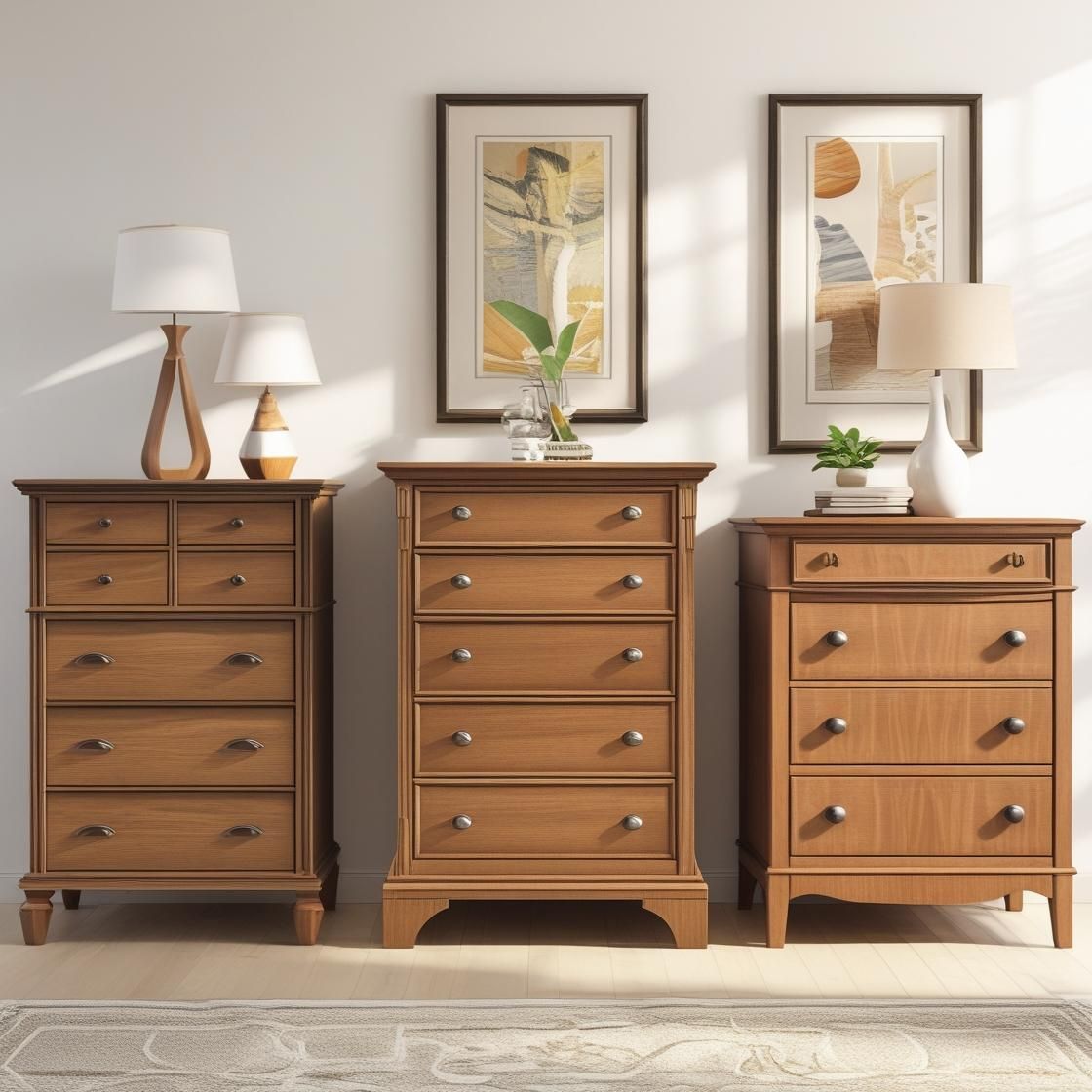
Looking for the perfect dresser for your home? Understanding standard sizes is the first step to a seamless fit. Whether you're measuring for a cozy apartment or a spacious master bedroom, our guide details the standard dresser height, depth, and drawer dimensions you need to know.
Discover the average size of a dresser and how to choose based on your room. We cover everything from typical dresser depth for narrow spaces to the standard height of a tall dresser for vertical storage. Learn the standard dresser drawer dimensions to ensure your clothing and accessories will fit comfortably.
Practical considerations are just as important. We answer common questions like the average weight of a dresser, how a solid wood dresser weight compares to other materials, and how to safely remove dresser drawers for easier assembly and moving.
Optimizing your layout is easy with the right measurements. Knowing the average depth of a dresser and standard drawer height allows you to plan its placement alongside other furniture, like your bed or a loveseat, creating a harmonious and functional space.
Explore our full Dressers FAQ for clear, detailed answers on common dresser sizes, drawer specifications, and expert tips to help you select the ideal dresser for your home .
1. What is a dresser?
-
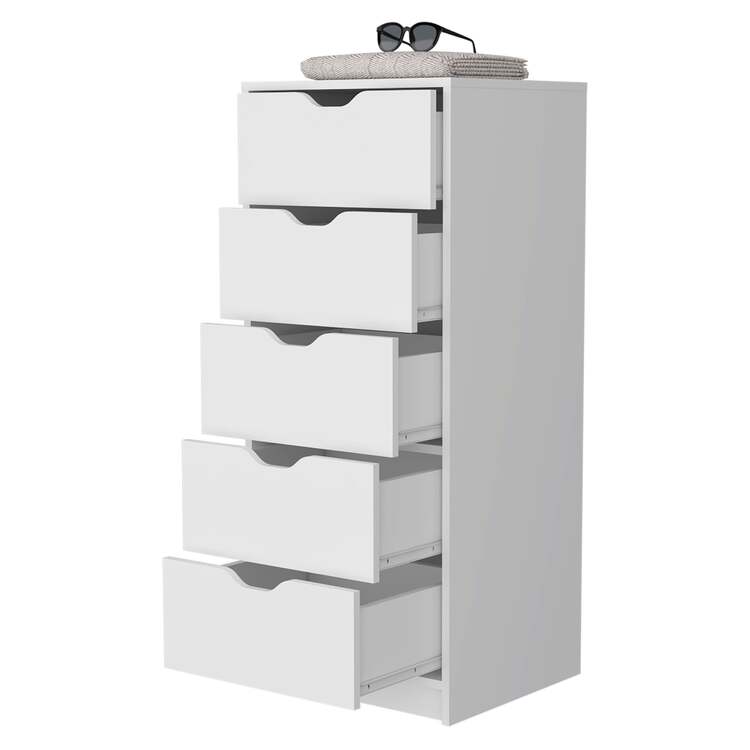
A dresser is a piece of furniture typically used in bedrooms for storing clothes. It features multiple drawers, with common sizes ranging from 30 to 72 inches in width, 16 to 20 inches in depth, and 30 to 60 inches in height.
2. How to organize your dresser?
-
To organize your dresser efficiently, start by sorting items by category and size. Use drawer dividers for smaller items, and place bulkier clothing like sweaters in the deeper drawers. Arrange items by frequency of use, with commonly used items at the top.
3. Where to put a dresser in a bedroom?
-
Place the dresser against a wall where it won’t obstruct the flow of the room. Ensure there is at least 24 inches of space in front of the dresser for easy access to drawers. Consider the height of the dresser if you plan to place a mirror or TV on top.
4. How to remove a drawers from a dresser?
-
To remove a drawer from a dresser, fully extend the drawer and locate the release mechanisms, usually found on the sides or bottom. Gently lift or press these mechanisms while pulling the drawer out. Be mindful of the weight, especially for deeper drawers that may hold more items.
| Step | Description |
|---|---|
| 1. Assess the Drawer Type |
Identify if the drawer has side-mounted or bottom-mounted slides. - **Side-mounted:** Metal tracks on the sides. - **Bottom-mounted:** Tracks located beneath the drawer. |
| 2. Prepare the Dresser |
Ensure the dresser is stable on a flat surface. Remove items from the drawer, especially if it’s deep (12 to 18 inches). |
| 3. Check for Release Mechanisms |
Look for a release lever or button on the side or under the drawer front. Press or pull it to disengage the drawer. |
| 4. Remove Side-Mounted Drawers |
|
| 5. Remove Bottom-Mounted Drawers |
|
| 6. Inspect the Drawer and Dresser |
Check slides and tracks for debris or damage. Clean if necessary. Standard drawer dimensions: Depth (14 to 18 inches), Width (24 to 30 inches). |
| Tips |
|
5. How wide is a typical dresser?
-
A typical dresser is usually between 30 to 60 inches wide, offering ample storage space for clothing and other items.
6. What is the average depth of a dresser?
-
The average depth of a dresser ranges from 16 to 20 inches, allowing for spacious drawers without taking up too much room.
7. What Are the Standard Dresser Dimensions?
-
Dressers come in a variety of sizes to fit different spaces and storage needs, but there are common standard dimensions to consider. These measurements vary based on dresser style, drawer configuration, and intended use. Here are the typical dimensions for different types of dressers:.
| Dresser Type | Width | Height | Depth | Description |
|---|---|---|---|---|
| Standard Horizontal | 40–60 inches (3.3–5 ft) | 30–36 inches (2.5–3 ft) | 18–24 inches (1.5–2 ft) | Wide and low, usually with 6–9 drawers, ideal for large top surface space. |
| Tall/Vertical | 24–36 inches (2–3 ft) | 42–60 inches (3.5–5 ft) | 18–22 inches (1.5–1.8 ft) | Narrow and tall, often with 5–7 drawers, great for vertical storage in small spaces. |
| Combo | 36–60 inches (3–5 ft) | 36–50 inches (3–4 ft) | 18–20 inches (1.5–1.7 ft) | Mix of drawers and cabinets, suitable for various storage needs and larger rooms. |
| Double | 60–72 inches (5–6 ft) | 30–36 inches (2.5–3 ft) | 18–20 inches (1.5–1.7 ft) | Wider with two rows of drawers, ideal for shared or high-storage bedrooms. |
| Small (Compact) | 20–30 inches (1.7–2.5 ft) | 26–36 inches (2.5–3 ft) | 15–18 inches (1.25–1.5 ft) | Compact for tight spaces, can double as a nightstand or entryway storage. |
8. How much does a dresser weigh?
-
The weight of a dresser can vary based on its size, material, and design. On average, dressers weigh between 75 to 250 pounds. Here's a breakdown based on common types:
Dresser Type Average Weight (lbs) Material Small (3-drawer) 30–50 lbs Particleboard/MDF Medium (5–6 drawer) 60–100 lbs Solid Wood/Plywood Large (7+ drawers) 100–200+ lbs Hardwood/Metal Vintage/Antique 150–300+ lbs Oak, Mahogany Kids' Dresser 20–40 lbs Plastic/Laminate - Small Dressers (3-4 drawers): Typically weigh between 30 to 70 pounds (13.6 to 31.8 kg). These are often made of lighter materials like particleboard or pine.
- Medium Dressers (5-6 drawers): Usually weigh between 70 to 150 pounds (31.8 to 68 kg). These may be made of solid wood, MDF, or a combination of materials.
- Large Dressers (7+ drawers or double dressers): Can weigh anywhere from 150 to 300 pounds (68 to 136 kg) or more. These are often made of solid wood or heavy composite materials.
- Antique or Solid Wood Dressers: These can be particularly heavy, sometimes exceeding 300 pounds (136 kg), depending on the type of wood and craftsmanship.
9. What is the standard height of a dresser?
-
The standard height of a dresser typically ranges between 30 and 36 inches (2.5 to 3 feet), though some styles and designs can vary slightly outside this range. Dressers that fall in this standard height range are ideal for easy access to drawers and comfortable use as a storage piece.
For dressers intended to double as a changing table, you may find heights around 36 to 40 inches (3 to 3.3 feet), offering a more accessible height for parents and caregivers. Taller dressers, such as chest of drawers, can extend up to 50 to 60 inches (4 to 5 feet) in height to maximize vertical storage in smaller spaces.
The width and depth of a dresser can also vary based on style. Typical dresser depths range from 16 to 20 inches, and widths generally fall between 30 to 70 inches. If you’re choosing a dresser for a specific room, it’s helpful to consider these standard dimensions to ensure it fits comfortably within your space.
10. What are the common dimensions of a six-drawer dresser?
-
A common six-drawer dresser is approximately 60 inches wide, 30 inches high, and 18 inches deep.
Dimension Range Description Width 47 to 60 inches (4 to 5 feet) Wider dressers offer more drawer space for larger rooms, while narrower dressers are ideal for compact areas. Height 30 to 48 inches (2.5 to 4 feet) Lower dressers around 30 inches fit well under mirrors or art, while taller dressers at 40+ inches offer vertical storage for small rooms. Depth 16 to 20 inches (1.3 to 1.7 feet) Provides ample drawer space without extending too far into the room, maintaining space efficiency. 
11. What size dresser should I get for a small bedroom?
-
For a small bedroom, a dresser that is around 30 inches wide, 30 inches high would be ideal. For tight spaces, a 10 inch deep dresser can be a great space-saving solution, especially in hallways or small bedrooms.
12. How many drawers does a typical dresser have?
-
A typical dresser has between 4 to 9 drawers, providing a range of storage options.
13. What is the ideal dresser height for a child's room?
-
The ideal dresser height for a child's room is around 30 inches, allowing easy access to drawers.
14. Can a dresser be used as a TV stand?
-
Yes, many dressers can be used as TV stands, especially those that are around 30 to 36 inches in height.
15. What are the dimensions of a tallboy dresser?
-
A tallboy dresser typically measures around 30 inches wide, 50 inches high, and 18 inches deep.
Dimension Measurement Height 48 to 60 inches (4 to 5 feet) Width 30 to 40 inches (2.5 to 3.5 feet) Depth 15 to 20 inches (1.25 to 1.67 feet) Number of Drawers 4 to 8 drawers 16. Is there a standard weight capacity for dresser drawers?
-
Dresser drawers can typically hold between 25 to 50 pounds, depending on the construction.
17. How deep should dresser drawers be?
-
Dresser drawers are usually between 6 to 8 inches deep, providing sufficient storage for folded clothes. The typical dresser depth falls between 16 to 20 inches, offering ample storage without taking up excessive room space.
18. What is a low-profile dresser?
-
A low-profile dresser is typically around 24 to 30 inches in height, designed for a sleek, minimalist look.
19. How tall is a chest of drawers compared to a dresser?
-
A chest of drawers is generally taller than a dresser, often ranging from 45 to 60 inches in height.
20. Can I find dressers with adjustable drawer heights?
-
Some dressers feature adjustable drawer heights, but it’s not a common feature.

21. What is the best material for a heavy-duty dresser?
-
Solid wood like oak or walnut is the best material for a heavy-duty dresser, providing durability and a substantial weight.
22. How much space should be between a dresser and a bed?
-
It's recommended to have at least 24 inches of space between a dresser and a bed for easy movement.
23. Are there dressers with built-in mirrors?
-
Yes, many dressers come with built-in mirrors, which are usually around 24 to 36 inches tall.
24. What are the dimensions of a double dresser?
Dimension Type Measurement (Inches) Measurement (Feet) Width 54 to 60 inches 4.5 to 5 feet Depth 16 to 20 inches 1.33 to 1.67 feet Height 30 to 36 inches 2.5 to 3 feet A double dresser typically features a combination of width, depth, and height that provides ample storage while fitting well in most bedroom layouts. Here’s a detailed breakdown of the standard dimensions:
- Width: Most double dressers range from 54 to 60 inches (approximately 4.5 to 5 feet). This width allows for multiple drawers, making it an ideal storage solution for clothing and accessories.
- Depth: The depth generally falls between 16 to 20 inches (around 1.33 to 1.67 feet). This measurement ensures the dresser provides enough space for storage without protruding too far into the room.
- Height: A double dresser is usually between 30 to 36 inches (approximately 2.5 to 3 feet) tall, which is convenient for placing decorative items or a mirror on top.
When selecting a double dresser, consider the dimensions in relation to your bedroom space to ensure a perfect fit while meeting your storage needs.
25. How heavy is a solid wood dresser?
-
A solid wood dresser can weigh anywhere from 150 to 250 pounds, depending on its size and wood type.
26. What’s the difference between a dresser and a chest of drawers?
-
A dresser is generally wider and shorter, often with a mirror on top, while a chest of drawers is taller and narrower.
27. Can I use a dresser in a living room?
-
Yes, a dresser can be used in a living room, especially as a TV stand or storage unit.
28. How do I measure for a dresser?
-
To measure for a dresser, check the width, depth, and height in inches, ensuring it fits the intended space with room to spare.
29. What are the typical drawer sizes in a dresser?
-
Typical drawer sizes in a dresser are around 6 inches high, 30 inches wide, and 16 to 20 inches deep.
30. Can dressers be customized to specific dimensions?
-
Yes, some furniture manufacturers offer custom dressers where you can specify the dimensions, such as height, width, and depth.
31. What is a highboy dresser?
-
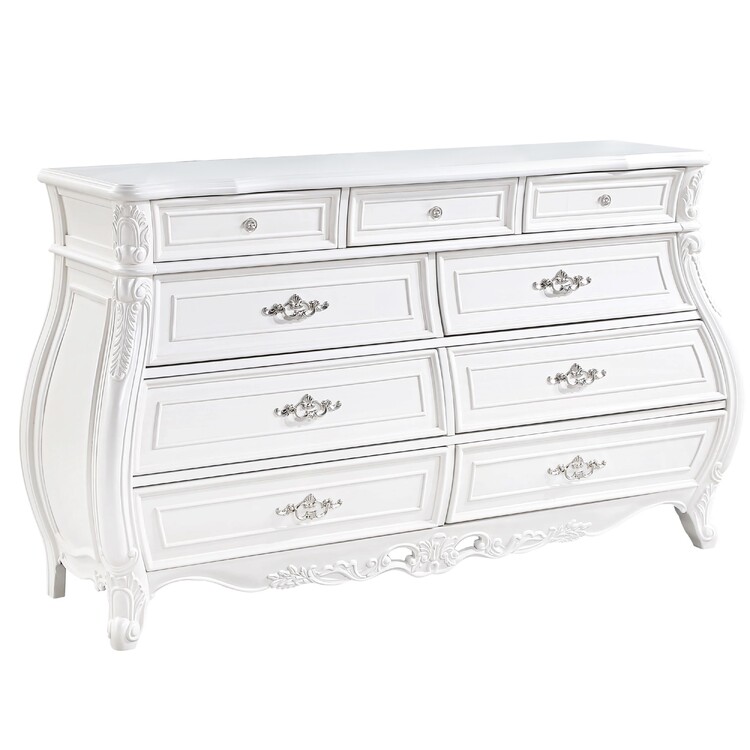
A highboy dresser is a tall, narrow dresser, often around 50 to 60 inches in height, perfect for small spaces.
32. How wide is a narrow dresser?
-
A narrow dresser is typically 20 to 30 inches wide, ideal for tight spaces.
33. What is the standard height for a dresser mirror?
-
A dresser mirror is usually 30 to 40 inches in height, designed to complement the dresser's size.
34. Can I place a dresser in a closet?
-
Yes, a dresser can be placed in a closet, especially if it’s a low-profile or narrow design.
35. How much clearance is needed to open dresser drawers?
-
At least 12 to 18 inches of clearance is needed in front of a dresser to fully open the drawers.
36. Are there dressers with soft-close drawers?
-
Yes, many modern dressers feature soft-close drawers, which close gently without slamming.
37. What is the best height for a dresser in a nursery?
-
The best height for a dresser in a nursery is around 36 inches, allowing it to double as a changing table.
38. Can a dresser support a large mirror?
-
Yes, most dressers can support a large mirror, especially those made of solid wood.
39. What’s the difference between a dresser and a bureau?
-
A dresser and a bureau are often used interchangeably, but a bureau may refer to a dresser with a writing desk top.
40. What is the maximum weight a dresser top can hold?
-
A dresser top can typically hold between 50 to 100 pounds, depending on its construction and material.
41. How do I choose the right dresser size for my room?
-
Choose a dresser size that complements the room’s dimensions, ensuring it’s not too large or small for the space.
42. Are there space-saving dressers for small apartments?
-
Yes, there are space-saving dressers designed for small apartments, often narrower and taller to maximize storage.
43. What is the weight of a medium-sized dresser?
-
A medium-sized dresser usually weighs between 100 to 150 pounds, depending on the materials used.
44. Can dressers be stacked for more storage?
-
Some modular dressers can be stacked, but traditional dressers are not designed for stacking.
45. How do I ensure my dresser is level?
-
Use a level tool to check the dresser, adjusting the feet or using furniture shims if necessary.
46. What is the typical height of a horizontal dresser?
-
A horizontal dresser typically stands between 30 to 36 inches in height.
47. Can I add legs to a dresser?
-
Yes, many dressers allow for the addition of legs, which can raise the height by 4 to 6 inches.
48. What’s the best way to clean a dresser?
-
The best way to clean a dresser is by using a soft, damp cloth for the surface and a vacuum for the inside drawers.
49. Are there dressers with hidden compartments?
-
Yes, some dressers feature hidden compartments for valuables, often integrated into the top or side panels.
50. What is the depth of a shallow dresser?
-
A shallow dresser typically has a depth of around 12 to 16 inches, making it ideal for narrow spaces. A 10 inch depth dresser may be shallow, but it can still provide practical drawer storage in narrow areas.
51. Can I find dressers with integrated lighting?
-
Yes, some modern dressers come with integrated LED lighting, perfect for nighttime use.
52. What is a triple dresser?
-
A triple dresser is a wide dresser with three columns of drawers, often measuring 60 to 72 inches in width.
53. How high should a dresser be for a TV stand?
-
For a TV stand, a dresser should be around 30 to 36 inches in height to provide optimal viewing height.
54. Can a dresser be refinished?
-
Yes, a dresser can be refinished to restore or change its appearance, especially if it’s made of solid wood.
55. How much space should I leave around a dresser for accessibility?
-
Leave at least 24 inches of space around a dresser for easy access and movement.
56. How to decorate a dresser?
-
Decorating a dresser can enhance its visual appeal and transform it into a stylish focal point in your room. Here’s a detailed guide on how to effectively decorate a dresser, incorporating dimensions for clarity.
Step Description 1. Choose a Theme or Style - Decide on a Style: Consider the overall decor of your room.
- Color Palette: Select colors that align with your room's decor.
2. Clear the Surface - Start Fresh: Remove all items and clean the surface.
3. Layer with Textiles - Table Runner or Cloth: Add a runner (12 to 24 inches wide) for texture.
- Material Choices: Choose fabrics that match your theme.
4. Select a Focal Point - Artwork or Mirror: Place a piece (24 to 36 inches in diameter) above the dresser.
- Framed Pictures: Use 5x7 or 8x10 frames in groups of three to five.
5. Add Height with Decorative Objects - Vases and Plants: Incorporate vases (10 to 15 inches tall).
- Candles: Use candles of varying heights (3 to 6 inches).
6. Incorporate Functional Decor - Trays and Bowls: Use trays (12 to 18 inches) for organizing small items.
- Storage Baskets: Consider woven baskets (12 to 14 inches in diameter).
7. Layering and Balance - Group Items: Arrange in odd numbers for visual appeal.
- Balance: Distribute items by height and weight.
8. Personal Touches - Sentimental Items: Include personal items for character.
- Seasonal Decor: Rotate decor with the seasons.
9. Final Adjustments - Step Back and Review: Assess and adjust for balance.
- Lighting: Add a small lamp (12 to 18 inches tall) for ambiance.
-
Anchoring a dresser to the wall is an important safety measure, especially in homes with children or pets. This prevents the dresser from tipping over, which can lead to serious injuries. Here’s a comprehensive guide on how to securely anchor a dresser to the wall, complete with dimensions for clarity.
- Position the dresser against a wall with at least 2 feet of clearance in front.
- Locate wall studs, typically spaced 16 inches apart.
- Mark the stud locations lightly with a pencil.
- Measure the dresser height (30 to 36 inches) and mark the desired height on the wall.
- Measure 2 to 4 inches down for bracket placement.
- L-Brackets: Secure one side to the dresser and mark drill holes on the wall.
- Straps: Attach one end to the dresser and the other to the wall.
- Drill pilot holes for L-brackets or strap anchors.
- For drywall, create holes for wall anchors (1/4 inch diameter).
- Install wall anchors for extra support, tapping them in until flush with the wall.
- Secure the L-bracket or strap to the wall anchors with screws.
- Ensure everything is tight and use a level to check alignment.
- Test stability by gently tugging on the dresser.
- Ensure any L-brackets are not visible from the front for aesthetics.
-
You can buy a dresser from a variety of places, including furniture stores, department stores, and online retailers. OJCommerce is a great option if you're looking for a wide selection of dressers at competitive prices. They offer various styles, sizes, and materials to fit your needs, with detailed product descriptions including dimensions, weights, and heights. Shopping online at OJCommerce allows you to compare different options easily and read customer reviews, making it easier to find the perfect dresser for your space.
- Standard Dresser: The average dresser height typically ranges from 30 to 36 inches, which makes it ideal for both storage and usability.
- Tall Dresser (or Chest of Drawers): The height of a tall dresser, also commonly known as a
chest of drawers, is generally defined as being more than 50 inches tall.
- Standard Depth: Most dressers have a depth of 18 to 22 inches, which provides ample storage while fitting comfortably in most bedrooms.
- Deep Dressers: Some larger or more traditional dressers may have a depth of up to 24 inches.
- Measure your room before buying
- Choose based on storage capacity
- Match style with existing furniture
- Look for durable materials and smooth-glide drawers
- Consider mirror dressers for added functionality
- Small Bedrooms (Under 10′ x 10′): Opt for tall, narrow dressers or 3‑drawer chests. These maximize vertical storage without taking up much floor space. A tall, slim profile keeps pathways clear and helps the room feel more open.
- Medium Bedrooms (10′ x 12′ to 12′ x 14′): Choose standard dressers (4–5 drawers) that balance width and height. Look for pieces with multiple shallow drawers to organize clothing and accessories efficiently without dominating the room’s footprint.
- Large Bedrooms (14′ x 16′ and above): Consider wide dressers (6+ drawers) or double dressers. These provide plenty of storage and can also act as a media console or decorative surface for art, lamps, or mirrors — perfect for spacious layouts.
- Walk‑In Closets or Dressing Areas: A low, long dresser with shallow drawers works well here. This style makes it easier to organize folded clothes and accessories while keeping the visual flow open.
- Narrow or Hallway Spaces: Select a console‑style dresser or a vertical chest. These slim pieces fit well against narrow walls and can double as decorative storage in transitional spaces.
- Measure your available space (including walkways and door clearance).
- Match the dresser height with other furniture to maintain visual harmony.
- Consider drawer depth and count based on what you plan to store.
- Width: Widths range from 30 to 61 inches (approximately 2.5 to 5.08 feet), offering options from compact tall dressers to wide 6-drawer models that maximize storage.
- Depth: Depths typically fall between 16 to 18 inches (around 1.33 to 1.5 feet), ensuring sufficient drawer space without taking up excessive floor space.
- Height: Heights vary from 42 to 57 inches (approximately 3.5 to 4.75 feet), covering both tall chest styles and standard dresser heights for bedroom use.
- Modern Minimalist Dressers: Sleek brass or white-finished dressers with clean lines offer a minimalist look and practical storage, typically with 3-6 drawers. Example: Lunavelle White-Finished 3-Drawer Dresser.
- Wide 6-Drawer Dressers: Perfect for larger bedrooms, featuring ivory-gray veneer with metal bar handles for a minimalist look. Example: Benjara Rowy 61-Inch 6-Drawer Dresser.
- Patterned Wood Dressers: Tall dressers with ivory wood finishes and diamond drawer patterns, combining storage functionality with decorative appeal. Example: Benjara Athon Tall Dresser Chest 5 Drawers.
- Measure your space: Before buying, measure the area where the dresser will go. Make sure there’s enough room to open drawers comfortably and move around.
- Consider storage needs: A 3-drawer dresser is ideal for storing folded clothes, accessories, or linens. If you need more storage, look for a wider or taller option.
- Choose the right height: Most 3-drawer dressers are between 30–36 inches tall, which makes them perfect for placing decorative items, lamps, or a mirror on top.
- Pick a style and finish: Black, white, or wood finishes are popular. Choose one that complements your bedroom décor, whether it’s modern, minimalist, or traditional.
- Width: 30-60 inches (most common 36-48") for chest drawers
- Height: 26-34 inches (standard dresser height)
- Depth: 16-22 inches (optimal for bedroom storage furniture)
- Height: 48-60 inches (compared to standard 26-34" dressers)
- Configuration: 6-8 narrow deep drawers stacked vertically
- Footprint: Narrower width (30-36") but greater storage capacity
- Top drawers: Usually 4 to 6 inches deep, perfect for smaller items like undergarments, socks, or accessories.
- Middle drawers: Generally measure 6 to 8 inches deep, providing ample space for shirts, tops, and light garments.
- Bottom drawers: The deepest—around 8 to 10 inches—great for bulkier clothing such as jeans, sweaters, or linens.
- Measure the space first: Before shopping, measure the wall where the dresser will go, including clearance for doors and walkways. Teens often like extra floor space, so avoid pieces that crowd the room.
- Match the scale of the room:
- Smaller rooms (e.g., under ~10′ x 12′): Choose a tall, narrow dresser or a 4‑drawer dresser to maximize vertical storage while saving floor space.
- Medium rooms (~10′ x 12′ to ~12′ x 14′): A 4–6 drawer dresser offers balance — enough storage without feeling too bulky.
- Larger rooms (~14′ x 16′+): Consider a wide dresser with 6 drawers or more for enhanced storage and stylistic presence.
- Consider storage needs: If the teen has lots of folded clothes, accessories, or hobby items, go for deeper, wider drawers. If the need is mostly tops and basics, a narrower five‑drawer or four‑drawer design works well.
- Think about multifunction use: Many dresser tops double as study space, décor display, or media stations — choose a height (usually ~30–36″) that makes the surface useful.
- Style and finish: Black, white, wood tones, or trendier pastel finishes can reflect your teen’s personality. A dresser that matches the room’s décor makes the space feel more cohesive.
57. How to anchor dresser to wall?
| Step | Description |
|---|---|
| 1. Choose the Right Location |
|
| 2. Use a Stud Finder |
|
| 3. Measure and Mark |
|
| 4. Install L-Brackets or Straps |
|
| 5. Drill Holes in the Wall |
|
| 6. Insert Wall Anchors |
|
| 7. Attach the Brackets or Straps |
|
| 8. Final Checks |
|
58. Where to buy a dresser?
59. What are the average dresser height and depth in inches?
The average dimensions of a dresser can vary depending on the style and design, but here are the typical measurements for height and depth in inches:
Average Dresser Height:
Average Dresser Depth:
60. How tall is a Standard Dresser?
A standard dresser is typically 30 to 36 inches tall. This height provides a convenient surface for placing items like mirrors, lamps, or decorative pieces while offering ample drawer storage below. Taller dressers, often called highboys or chest of drawers, can range from 42 to 60 inches in height, making them ideal for vertical storage in smaller spaces.
61. How to Choose a Dresser?
To choose the right dresser, consider your storage needs, room size, and style preferences. Start by measuring the available space and decide how many drawers you need for clothing, accessories, or linens. For small bedrooms or apartments, opt for a tall, narrow dresser to save floor space. If you need a multi-functional piece, consider a dressing table with drawers and a mirror. Match the dresser’s style and finish with your existing décor for a cohesive look. Always check for sturdy construction and smooth drawer operation.
Quick Tips:
62. Can you recommend dresser styles that fit specific room dimensions?
Choosing the right dresser style based on your room dimensions ensures the piece not only fits comfortably but also enhances the flow and visual balance of the space. Here are dresser style recommendations based on common bedroom sizes and layouts:
When choosing a dresser, always:
For a curated selection of dressers that can fit various room sizes and styles, explore online options here: Browse Dressers.
By pairing your room dimensions with the right dresser style, you’ll create a functional and balanced bedroom layout that feels both spacious and stylish.
63. What are the popular sizes and styles of ivory dressers available online?
| Dimension Type | Measurement (Inches) | Measurement (Feet) |
|---|---|---|
| Width | 30 to 61 inches | 2.5 to 5.08 feet |
| Depth | 16 to 18 inches | 1.33 to 1.5 feet |
| Height | 42 to 57 inches | 3.5 to 4.75 feet |
Ivory dressers come in a variety of sizes and styles to suit modern and classic bedroom designs. Here’s an overview of popular dimensions and styles:
Popular styles of ivory dressers include:
When choosing an ivory dresser, consider the room size, storage needs, and desired aesthetic. Compact tall dressers save floor space, while wider 6-drawer options provide maximum storage and a modern design statement.
64. How do I choose the right 3-drawer dresser for my bedroom?
Choosing the right 3-drawer dresser for your bedroom involves considering your space, storage needs, and style preferences. It is a compact storage solution that works well in smaller bedrooms, guest rooms, or as an accent piece.
For a wide range of options, including different styles and finishes, check out available 3-drawer dressers online here: Explore 3-Drawer Dressers.
By considering these factors, you can select a 3-drawer dresser that fits your bedroom perfectly, meets your storage needs, and enhances your room’s aesthetic.
65. What is the Width, Height & Depth of a Dresser?
Standard dresser dimensions typically range:
Example: A popular 6-drawer dresser measures 48"W x 30"H x 18"D. Vertical dressers may be narrower (30-36"W) but taller (34-48"H). Always check product specifications for exact furniture dimensions.
66. What is Considered a Tall Dresser?
A tall dresser (often called a vertical chest or highboy dresser) typically has these characteristics:
Tall dressers are ideal for small bedroom spaces where floor space is limited but clothing storage needs are high. The term "armoire dresser" may refer to even taller units exceeding 60".
67. How Deep Should a Dresser Drawer Be?
The ideal depth of a dresser drawer typically ranges from 6 to 10 inches, depending on its purpose and the type of clothing you plan to store.
For a well-organized dresser, choose a mix of shallow and deep drawers that balance both accessibility and storage capacity.
68. How do I choose the right dresser size for a teenager’s room?
Picking the right dresser for a teenager’s bedroom means balancing storage needs, room size, and personal style. Teen spaces often need to store clothing, accessories, and sometimes school supplies, so the right dresser can make a big difference in organization and comfort.
Here are practical tips to guide you:
By assessing the room’s size, your teen’s storage needs, and preferred style, you can choose a dresser that keeps the room organized while fitting perfectly into the space.
69. How much weight can you safely put on top of a dresser or on top of a TV on a dresser?
Most standard solid wood or high-grade MDF dressers can support 50 to 100 lbs on top, provided the weight is evenly distributed. Remind readers that the TV stand width should never overhang the sides of the dresser.
70. How much weight can you safely put on top of a dresser or a TV on a dresser?
Most standard dressers can safely support 50–150 pounds on the top surface, depending on the material, construction, and manufacturer. Solid wood dressers generally hold more weight than particleboard or MDF models. If you're placing a TV on a dresser, ensure the TV base fits comfortably within the dresser's width and always check the manufacturer's recommended weight capacity. Avoid overloading the top with heavy décor to prevent tipping or damage.
71. How do you fix a sagging or sticking dresser drawer bottom?
A sagging drawer bottom is usually caused by excessive weight or a thin panel. Remove the drawer, empty its contents, and inspect the bottom panel for warping. Reinforcing the bottom with a plywood sheet or replacing the damaged panel often solves the problem. If a drawer sticks, clean the drawer slides, tighten loose screws, and apply a furniture-safe wax or silicone lubricant to ensure smooth operation.
72. How do you move a heavy solid wood dresser upstairs without scratching floors?
Start by removing all drawers and emptying the dresser to reduce its weight. Wrap the dresser in moving blankets and protect your floors with furniture sliders or cardboard sheets. Use lifting straps or a stair-climbing dolly whenever possible, and always have at least two people move heavy solid wood furniture. Avoid dragging the dresser directly across hardwood or tile floors, as this can cause permanent scratches.
73. What is the difference between dovetail, dado, and corner-block drawer joints?
Drawer joints affect the strength and durability of a dresser. Dovetail joints interlock like puzzle pieces and are considered the strongest, making them ideal for premium solid wood furniture. Dado joints use grooves to secure drawer panels and provide reliable everyday strength. Corner-block construction reinforces the frame with wooden blocks to improve stability and reduce wobbling. For long-lasting furniture, dovetail construction is generally the best choice.
74. How do you match a dresser to an existing bed frame if they aren't from the same set?
Matching furniture doesn't require buying a complete bedroom set. Focus on coordinating the wood finish, hardware color, material, and overall design style. For example, a walnut dresser pairs well with walnut or warm-toned oak beds, while matte black hardware complements modern and industrial bedrooms. Keeping similar proportions and design elements creates a cohesive look without requiring identical furniture.
75. How do you remove bad smells or chemical odors from new dresser drawers?
New furniture may have a temporary odor from finishes or adhesives. Leave the drawers open in a well-ventilated room for several days to allow the smell to dissipate naturally. Placing baking soda, activated charcoal, or coffee grounds inside the drawers can help absorb lingering odors. Wiping the interior with a mild vinegar-and-water solution and allowing it to dry completely may also reduce unwanted smells. Avoid storing clothing until the odor has significantly faded.
75. Are dressers with mirrors still popular?
Yes. Dressers with mirrors remain a popular choice, especially for traditional, transitional, and farmhouse bedrooms. They provide a coordinated furniture set while making the room feel brighter and more spacious. However, many homeowners now prefer separate wall-mounted mirrors for a cleaner, more contemporary look. The best option depends on your available space, décor style, and personal preference.
76. What is the difference between a dresser and a wardrobe?
A dresser stores folded clothing in multiple drawers and usually has a wide, low profile that fits comfortably in most bedrooms. A wardrobe, on the other hand, is a taller storage cabinet with doors, hanging space for clothes, shelves, and sometimes drawers. Choose a dresser for everyday folded clothing and accessories, while a wardrobe is ideal for hanging garments such as dresses, suits, jackets, and coats.
77. Which dresser style is best for modern bedrooms?
Modern bedrooms pair well with dressers that feature clean lines, minimal hardware, neutral colors, and functional storage. Popular styles include Scandinavian, Mid-Century Modern, Contemporary, Japandi, and Modern Farmhouse. White, black, natural oak, and walnut finishes remain timeless choices that blend easily with a variety of bedroom designs. Select a dresser that complements your room size while providing enough drawer space for your storage needs.
Quick Recap:
When buying a dresser, keep these key stats in mind: the average dresser height is around 30–36 inches, and the average depth of a dresser falls between 16 and 20 inches. Compact options like a 10 inch deep dresser or 10 inch depth dresser are great for small spaces. As for weight, how much do dressers weigh depends on materials and size — the average weight of a dresser typically ranges from 100 to 150 pounds. If needed, you can remove dresser drawers to make moving easier. Understanding these measurements ensures you pick a dresser that fits your space and lifestyle perfectly. Also to make transport easier, you can remove dresser drawers beforehand, which reduces weight and prevents damage.